
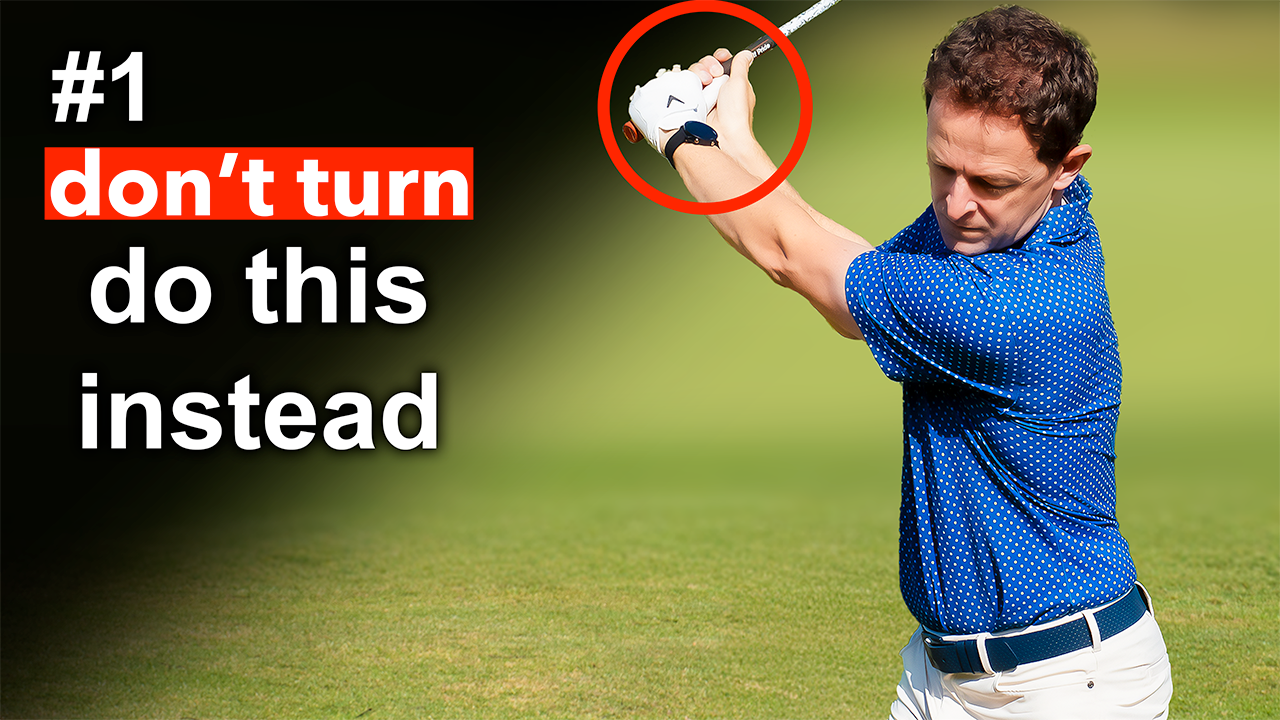
3 Golf Swing Tips That I Wish I'd Told You Sooner
Nov 11, 2025 Get This Free Practice Plan
Transcript Summary-
Hey everybody, Danny Maude here. You’ve probably heard the phrase practice makes perfect, but the truth is, practice makes permanent — so if you’re practicing the wrong things, you’re just grooving bad habits into your golf swing. I see it all the time, especially with players who slice the golf ball or struggle with solid contact. That’s why in this lesson, I’m going to share three simple drills you can do in just six minutes a day. These drills will help you understand how the body should naturally move — how to wind up in the backswing, how to transition smoothly into the downswing, and then how to blend it all together into a flowing, effortless golf swing.
Now, if you’re new to the channel and this is one of your first golf lessons with me, consider subscribing. I release videos like this every single week to help you play your best golf. And don’t worry — everything I share is also included in a free downloadable practice guide you’ll find in the description below.
Alright, let’s dive into drill number one. I recently gave this to a student of mine, Paul. Like many golfers, Paul was turning everything in his backswing — his knees, hips, and shoulders all moving together. It looked fine, but there was no resistance, no power. The key here is learning to load your trail leg. Imagine your zipper turning into your trail leg — you’re creating resistance, not just spinning everything away. This simple move stores energy in your right leg, giving you something to push off in the downswing. Spend a couple of minutes a day just feeling that — resist the urge to let the knees and hips spin too freely.
Drill number two is all about the transition. All great players move forward before they start to turn through. What most amateurs do instead is spin their hips immediately and lose power. So from that loaded trail leg, I want you to feel your zipper move into your lead leg before you turn. Keep that trail heel grounded and feel the push from the ground up. This helps you use the legs properly, creating space and a more powerful impact position.
Once you’ve got those first two drills, we move to drill number three, where we blend everything together. This one’s a little more advanced, but it’s what ties your swing into a smooth, effortless motion. You’re simply training the feeling of loading into your trail leg, moving into your lead leg, and then returning your body back to a balanced, athletic position — almost where you started at setup. From here, you can fire through impact naturally without spinning out or sliding underneath.
Look, these drills might seem simple, but they’re powerful. They give you the feelings your body needs to move correctly — and those feelings are what make all the difference on the golf course. Watching videos is great, but it’s the doing, the feeling, that builds real skill. Practice these movements for a few minutes each day, and you’ll start to sense the effortless power the best players create.
If you enjoyed this video and think it could help someone else, give it a thumbs up and share it with a friend. And if you’d like to see a personal lesson I had where I was working on similar concepts with Pete, check out the video right here — it’s one of the most popular on the channel. But until next week, have a wonderful golfing.
Full Transcript- Hey everybody, Danny Maude here. Practice makes permanent. The problem is if you are permanently practicing the wrong things, you could be grooving many faults into your golf game. For instance, if you happen to slice the golf ball or struggle with contact, what I want you to do is these three simple golf drills. They'll only take you six minutes a day, absolute maximum. But what they will do is they will teach you the feeling first of all of how the body is supposed to naturally move into the back swing. Most people have already ruined their golf swing by the time they've got to the top of the swing. Golf tip number one is going to teach you the feel of this. It's super super important. Golf swing tip number two will then teach you how to feel what's required to transition back down towards the impact area. And number golf tip three, teach you how to blend all this together in a flowing and an effortless golf swing. Can't wait to share it with you. Before I do though, look, if you're new to the channel, so you're one of your first golf lessons of mine, please consider subscribing. I release golf videos just like this one every single week to try and help you improve your game. Plus, you never have to remember a thing. Everything we do here, I'll put into a free downloaded practice guide in the description box below. Great. So, what I want to do now is give you these three golf drills. They're just if you can spend six minutes a day working on them. They're going to really help you truly experience how to move in the back swing, how to transition in the down swing, and then more importantly, how to blend those two things together so you start to create this lovely effortless motion. So, golf drill number one I just give to a recent student of mine, Paul. Now, I want you to take a look at these two swings. I'll show you an exaggerated way. uh first and you tell me what you can see. So this is swing number one. I see this a lot with many amateur golfers who struggle. They're trying really hard to get extra distance but nothing's happening. So this is kind of swing number one.
So that's swing number one. Look at that. You got 75 miles an hour worth of club speed. Carry distance 130 yards. Notice the length of that swing and the flow of that swing. This is golf swing number two.
Just take a look at the speed on this one here. So, we've gone from 75 mph to 83.9 miles an hour with 157 yard catch. So, another was it almost 30 yards of extra. Did those swings look different? I'm sure they did. Did one swing look so much faster and so much harder than the other? Probably not. So, what's happening? And this is what I see with a lot of players who are struggling to get consistent contact and get the distance that I know they deserve. So here's what's happening in those two swings. And this is exactly what Paul was doing and I see with a lot of my students. What's doing if you can pause the video so you can experience this. It'll be really useful. So what's happening a lot is is when people turn, they turn everything in the back swing. So look how my knees turn, my hips turn, everything turns in the back swing on the way back. And then on the way through, look, the knees, hips, and everything turn on the way through. And you might be looking at that and going, "Of course, yeah, surely that's what happens, right?" But it's not. And when you do this, this actually feels quite relaxing and comfortable when you turn to your right and turn to your left, but there it's not a golf swing. And there's no power there. There really isn't. In fact, imagine throwing a ball like this. You wouldn't do it. You could try and then flick your arm out and try and most Oh, why aren't I hit it very far? The best players, this is where drill number one comes in. They learn that as we turn to our right away from the golf ball, we are resisting with this leg. And the best way I can describe this is this. Most players look look like this. They're turning everything in the back swing. Look how look my whole leg is turning this way in the back swing. No resistance. Now what I gave with Paul and it really was an instant game changer. In the first instance, he had to think about it. This is normal by the way. So bear with me in this video, right? Follow it through from start to finish. You'll learn and really feel the benefit. You can pause the video and do this with me. Be amazing. Notice what I'm doing here. I'm not allowing this foot to just kind of pivot into my back. What I'm doing is this. I'm taping my zipper and I'm turning that zipper into my trail leg here. I'm not turning this away. I'm turning it into it. Now, what I've got, look, is a loaded trail leg. This is unbelievable amount of power stored in this leg that I can use to push back towards the target. Right? Super super important. The same is true. Look in the lead leg. I am not I am not doing this pivoting this way as I swing back now I am resisting in that leg as I pivot back here now I'm resisting in this leg here this is getting me look to hold this ground is getting me to really move in the correct way in the back swing this way whereas with Paul because he turned this is what I see a lot he lifted away lifted away from this angle look at this lift lifted off the shot. No power whatsoever. We want to move away from the ground. So, learning to sense these kind of this feeling is really really important. So, drill number one. All I want you to do is you can do it with a club without club. Do it indoors. Spend a couple of minutes to start with just take your zipper, move it. Look, if I put a ball here, move it towards your trail leg. Don't do this. Don't just collapse this leg and every turn everything. There's nothing there. Move it towards this leg. It's like you're crushing something here. Same thing. Feel that motion first. Same thing in your left leg. This time, don't move this and crush this here. Resist that motion. Resist the urge as you turn back to kind of move this with it. Learn this sensation. What you will start to find both knees are pointing forward. They're not turning around. what you'll start to find is a very very loaded position and a great place to start to find uh to to build power and effortless into your swing. So, let's now work on drill number two, the second two minutes of your practice. So, all great players do these two things. They move forward in their transition before they ever make a turn back towards a target. That's the first thing they do. And the other thing you do, if you look at my trail heel here, this heel always moves first before it works back out and around. I don't see that with most players. What we see with most players who lack consistency of contact and and power is this. First of all, they turn before any movement. And the other thing they do here is, watch my trailer heel. Because they go right and left, they simply spin out here like this. They flick the hands. There's no real power. We've gone. Right. So, we want to naturally eliminate. We want to naturally eliminate those two things with dru number two, which is this. So, we've now loaded this trail zip, this zipper into your trail leg, and you've resisted here. What we now need to do is simply reverse that. So, what we're going to do now is I want to move the zipper now into your lead leg. You see a difference here? But the reverse happens, right? So, feel this. I'm going to show I'm using this as a visual. This is a great tool. I'll put a link in the description for this actually. I just get these on Amazon just as a feeling, but I'm going to use it more as a visual. As I'm loaded here, it feels more comfortable simply just to do this and turn everything through. And that's where most people would be. But as I've loaded it here, what I'm going to train now is this sensation. Move my zipper from my trail leg, push it, look, into my lead leg. Now notice here this foot hasn't twisted has it? It's stayed there. It's not turning inwards. This is a sensation that you need. Right? Notice this leg. This leg also this leg isn't just buckling here and turning this way which most people do. It's resisting. It's almost kind of as I'm turning here. This leg's almost doing this very naturally. Right? I'm feeling this motion. This is helping me use the ground and generate this power through the impact area versus right left. There's nothing there. Makes sense. So, you need to develop these sensations. I'm going to show you it from this angle here. So, I'm turning into this leg here. I've resisted in both left and right. A good maybe visual here is to almost imagine knees always pointing forward here. They're almost turning to the right and turning to the left. Too quickly here. Look, I'm they're keeping them almost pointing towards you. And then look at me in transition here. They still look towards you, right? This is where we want to be. Then they fire through impact. Okay, look at from this angle. Turn the zipper into my trail leg. And then from here, look, I'm pushing. I'm pushing back to the target here into my lead leg. Pushing the zipper into this leg. Feel that motion. Take time to do it. You will feel tension in your thighs as you do this. Now, with Paul, as we got him to hit some shots with this, we kept it really simple. I get, you know, he can't focus on both legs. So, he we focus predominantly on his trail leg. I got him here simply to do this because he was somebody who would pivot right here and pivot through. All I got him to do is load this trail leg and in transition, don't let this right leg get in the way. I said to him, imagine that staying back like this, almost staying fairly straight. So, he's pushing away as he's keeping it straight. This zipper, look, is moving towards my left leg here perfectly. What that does is it gives him all this space look to turn into, right? That then helped him create this beautiful straight shot compared to this where he came over the top and would chop and slice it. Right? So, learning the sensation one push back into this leg here. There's the two exercises I want you to work on. One, two. One, two. That is two drills. I want you to practice over and over again for two minutes each time. So, drill number three is about kind of blending it all together. It's a slightly more advanced drill. I didn't give this to Paul because he there was enough to get on with drills number one and two, but it's certainly something that he needs to practice at home, and I suggest you the same. So, what we've got is is if you slice the golf ball, we know that your tendency is going to want to be to spin this way. If you hook the golf ball, just like I do sometimes, your tendency is going to want to be to slide underneath, right, and get it this way. So, how do we keep training transition and blending these things in? Well, you've now loaded that back swing here. Turn into this leg here and there. Now, on the way down, all we want to do is simply this. As we're transitioning, we want to go back and we want to get the sensation here that when we get here into this place, the knees, the hips, and the posture is almost back to where it was, right? And move backwards into almost my setup position here, right? With my body from here, this is a great place because normally from someone like myself, I would be there. And for somebody who slices, they would be here, right? So training the sensation of there back to where almost my reset where I would start addressing my body. I'm now in a position now to fire up through the shot and drive the shot. Now when you do these things again they can seem complicated can't they? But doing the exercises the feelings that you get from them those are what give you the aars. If you think you can just watch a video and then you go out and play you're not going to be able to do this. The exercises are designed to provide you with the feelings that you go, "Ah, I get it." Right? So, let's have a look at this action. So, let's say someone like myself who's hooking the golf ball at times, I know I would get here. So, I got the feeling, oh my god, yeah, I'm going downwards into forward bend. I don't normally do that. I normally stay too high. That gets me flipping, right? That makes so much sense. Then I can fire it. Right? So, once you've done a few of them, you can start to then start to trust it over time. And then what happens is that you can start to add and you can make it much much more flowing time and time again. But the flow comes from the development and the confidence in what you first of all understanding what you need to do then learning to kind of practice at home in slow motion feel what you need to do then you get the aas then you can start adding into the golf swing. If you don't have good foundations, everything you do and everything you try to do above is just pure compensations. And if you ever saw my video with Pete, that's kind of what he was telling me to do. He was like, "Danny, you've got lots of conversations going on here." If you love this video and you think it's going to help, give it a thumbs up, share it with somebody who you think it could help. And if you want to see my personal lesson with uh Pete where I was struggling a little bit, check this video out right here. It's been uh voted one of the best on the on the internet at the moment. Uh but until next week, have a wonderful golfing.
