
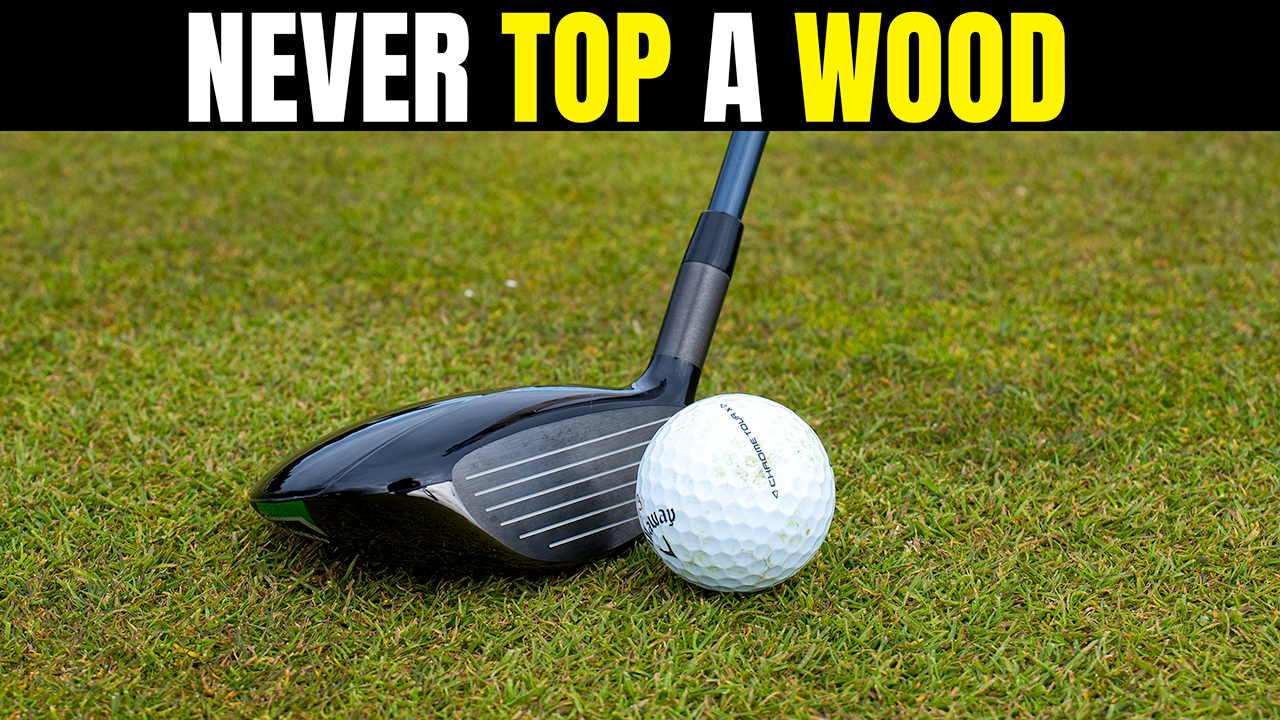
How to Strike Your Fairway Woods & Hybrids Every Time!
Apr 07, 2026 Get This Free Practice Plan
Transcript Summary-
If you’ve ever stood over a fairway wood and felt like you’re either catching the top of the ball or struggling to get it airborne consistently, you’re not alone. What we really want is that clean, ball-first strike that sends the ball up with a lovely, powerful flight. And to do that consistently, there are two key things we need: we need the club to strike the ground in the same place every time, and we need to deliver enough loft at impact. Most golfers who struggle here tend to sway too much side-to-side, which makes low point control difficult, or they spin too much on the way down, which steepens the club, removes loft, and leads to those dreaded top shots.
This is where the “prop drill” comes in, and it’s incredibly simple but very powerful. At setup, imagine a post running down from your lead shoulder into the ground. Then, with your trail leg, feel like you’re propping yourself up against that post. What this does is stabilise your movement—no excessive sway—and encourages a more centred turn. As you swing back, you’ll feel your trail leg supporting you and your trail pocket moving behind you, which makes it much easier to return the club to the same spot at impact.
Now on the way down, this is where it really helps. Many golfers spin their hips too quickly, throwing the club over the top and losing loft. Instead, feel like your trail pocket stays back as you come into impact, still “propping” that post. This creates space for the club to approach the ball on a shallow arc, helping you strike it cleanly and launch it higher. It might feel a little restrictive at first—and that’s actually a good thing. That restriction is what keeps your body in control rather than letting the club take over.
When you try this, set the ball just inside your lead heel, turn your trail foot slightly out, and really feel that trail leg supporting you throughout the swing. You may even notice your trail heel stays down a bit longer—that’s a great sign you’re not spinning out. Trust the feeling, stick with it, and you’ll start to see more consistent strikes, better launch, and more distance—all without swinging harder.
Full Transcript- If you find when you're hitting fairway woods, they tend to look a little bit like this and you hit the occasional top shot, but you'd much prefer to hit a shot that looks something like this,
then what I want to introduce you to is the prop drill. It's been working incredibly well for my students with their irons, and I've been using it with their fairway woods to improve contact and consistency and stop stop topping woods. And what's cool about it is is it will require you to just do one thing at setup. And you can do this all on a golf course to kind of prop yourself up. Give you a little hint here. And what it does, it really helps you to consistently arrive the club at the same point each and every single time. I can't wait to share it with you. Now, before I do though, look, if you're new to the channel, your first golf lessons of mine, please consider subscribing. I release videos just like this one every single week to try and help you improve your game. Plus, you never have to remember a thing. Everything we do here, I'll put into a free download practice guide in that description box below. In fact, I'll pin it to the top comment below this video. Now, I know fairway woods and hybrids can be a bit tricky to hit at times, but I'm sure you've hit some really good shots and you just want to do it a bit more consistently. Well, to do that, you need to be good at a couple of things. The first thing you need to be good at is you need to make sure that the club is landing consistently in the same spot on the ground every single time. That really helps you improve your contact. But the other thing is is fairway woods don't have a lot of loft on, do they? So, we need to make sure that you've also very good at delivering enough loft onto this club each time to get those lovely high soaring flights. And I don't see that enough with people that are struggling with fairway woods. So, two patterns, two things that I tend to see more often with people that are struggling with fairway woods. They tend to move around side to side way too much. What do you think that's going to affect? going to affect your ability to consistently land the club. Yeah. Now, the second thing I see is golfers twisting too much on the way down. Yeah. Way too much twist, not enough staying on the ball. What does twisting do? What it throws the golf club over the top. It gets the club coming down steeply on the ball. That's your top shot. But what it's also doing is what? It's taking all your loft away from the golf club. We need this club coming down on the ark so it delivers the right amount of loft. So we need loft and we need to make sure that you're landing the club in the right spot. And that is where the prop drill comes in. So it's pretty easy to set up. All I want you to do is imagine we put the ball here with a fair just about club width inside our lead heel. And I want you to imagine we've almost got a post here, right? A stake stuck in the ground. And what we're going to do with our trail leg, your trail leg is you're going to prop up this stake. Now, this is what this does is this. It's going to first of all stop for if you happen to be one of those that tends to sway a lot of here off the ball and this right leg starts to kind of collapse. It's going to prop that up. That's the first thing. But it's also because you're propping it up when you move back. You're going to feel your your trail leg propping and pushing your right pocket here behind. It's also going to help you turn while staying nice and centered. Which one of those two things is that going to help? Much more likely to do what? Return now back to the same spot every time compared to this. Yeah. Prop yourself up there. The second thing the prop does, and this is where um my recent student Roger, this is where the prop came in unbelievably handy for him. He was a spinner. So, he was pretty good at kind of in a sense staying nice and centered. But on the way down, he would spin himself. Look at the trail pocket here. It's coming over. Spin comes over the top. Uh we've said earlier it takes all the loft off. So, I said now here, use the prop now to keep your trail pocket here back. So, as you're coming down, you're going to prop yourself up and keep that trail pocket back all the time. Now, what by this trail pocket staying back, all the space he's got for what? The club to work beautifully back on the ark and deliver loft to that golf club. Now, does that mean I'm asking somebody to just do this? No. In fact, when Roger did this, did he still turn? Of course he did. But what the prop is doing is balancing out your swing. Everybody um is generally turning way too much on the way down. By propping yourself up, it's still going to turn, but a lot less and a lot slower rate to give yourself time to come back on the ark and deliver that loft into the ball. Now, when Roger did this to start with, he said, "Oh, it feels really restrictive, Danny." Yes, it does, Roger. Restriction is good. You have way to an unrestricted swing. Yeah. This restriction is your body controlling the forces that that club is delivering. This club's traveling really fast. If you don't have any restriction, you're going to be taken with it. Yeah. So, yes, the restriction does feel a bit strange, but it's there for a good reason. So, let we This is kind of the routine we gave Roger. So, you get yourself set up here. Get the ball just opposite your lead in a club inside the lead heel. This is your post. Imagine your stake from the elite shoulder into the ground. We're going to turn my trail foot out a little bit here and prop myself up. That is going to help me to pivot reasonably center around this ball here. And then I'm coming down. I'm going to really sense that that pocket is being kept back. Feel like it's kept backwards as I'm turning back into this golf ball and delivering that loft. So just prop myself up is the image.
Listen to that sound. Ball first contact. It's feel it just feels absolutely lovely when you do that. Now the other thing look Roger it felt restricted to him and it took a little bit of him trusting it. He didn't like the restriction so he kept wanting to go but I said just keep trusting it Roger. Keep that restriction there. and he'd gone from 146 yards and then he cut you know he said take a look at this we took put him on track man to 176 next ball 181 so so good right so and again most of this was simply no extra effort most of this is coming from pure contact and delivering loft to the ball okay so take your time you take straight to the golf course prop yourself up. No. Prop that steak up here in the ground. Yeah. Here. There. And one thing Roger said to me after the shot, he said, "Danny, I really feel like when I'm doing this, my foot stays almost feels quite flat to the ground. Normally, I'd be up here. It feels like I'm almost kind of [snorts] the heels down for longer." And I said, "Yes, that's really, really normal because you're pushing and you and you're propping yourself up here." That's a really good thing. You'll see with a lot of great players, this kind of heel stays down for a lot longer than you see with a lot of para players which are spinning themselves out. So it will come up, but it will feel like it's down for longer. So if that feel works for you, great. Maybe kind of borrow that one. So we get ourselves set up again. Ball inside lead heel. Prop ourselves up. There's the stake in the ground. My trail leg's propping that up. I'm pivoting around. I really feel like that right leg is propping that stake up. It's still propping it up here. Moving into impact [snorts] and away we go.
I actually got that one a little bit on the heavy [gasps] side. Now, there's another thing here. So, I got that a little bit heavy. Now, what's funny about that is I didn't take into consideration there, the ground is above my feet. That's another factor that you've got to consider when you hit fairwoods. Notice the ground. Ball above my feet. I should have gone down the grip. Ball above my feet. Should have gone down the grip a little bit on that one. And then done the prop drill. [laughter] Oh, it's funny. [snorts] Okay, get set. Prop myself up. Get myself set. And away we go. That's a bit better. All right, so take the prop drill. Prop yourself up. Pivot yourself around here. Get that body working beautifully back into impact here so you're delivering loft to that ball, not spinning, not moving around excessively. Okay, hope you enjoyed this video. Hope it really helps to hit the fairwoods a bit more consistently once you've got them going. Maybe try it with your irions as well because this is where I I actually started using this drill just with the irons and it works a treat with your irions, too. If you're struggling with the driver, check this video out right here. Remember, I put a free practice plan. I'll pin it to the top comment below this video. And if you'd like more personalized help from myself, visit dannymaude.com. All details down below.
