
If You Struggle With Chipping, Just Do This Before Every Shot
Aug 19, 2026 Get This Free Practice Plan
Transcript Summary-
A lot of golfers get really nervous around the greens because they’re constantly worried about fatting or thinning their chips. You might practise really well, but when you get onto the course, the pressure creeps in and suddenly the strike disappears. The good news is there’s one technique that can work for a huge percentage of shots around the green, whether you’re dealing with a tight lie, rough or an awkward position.
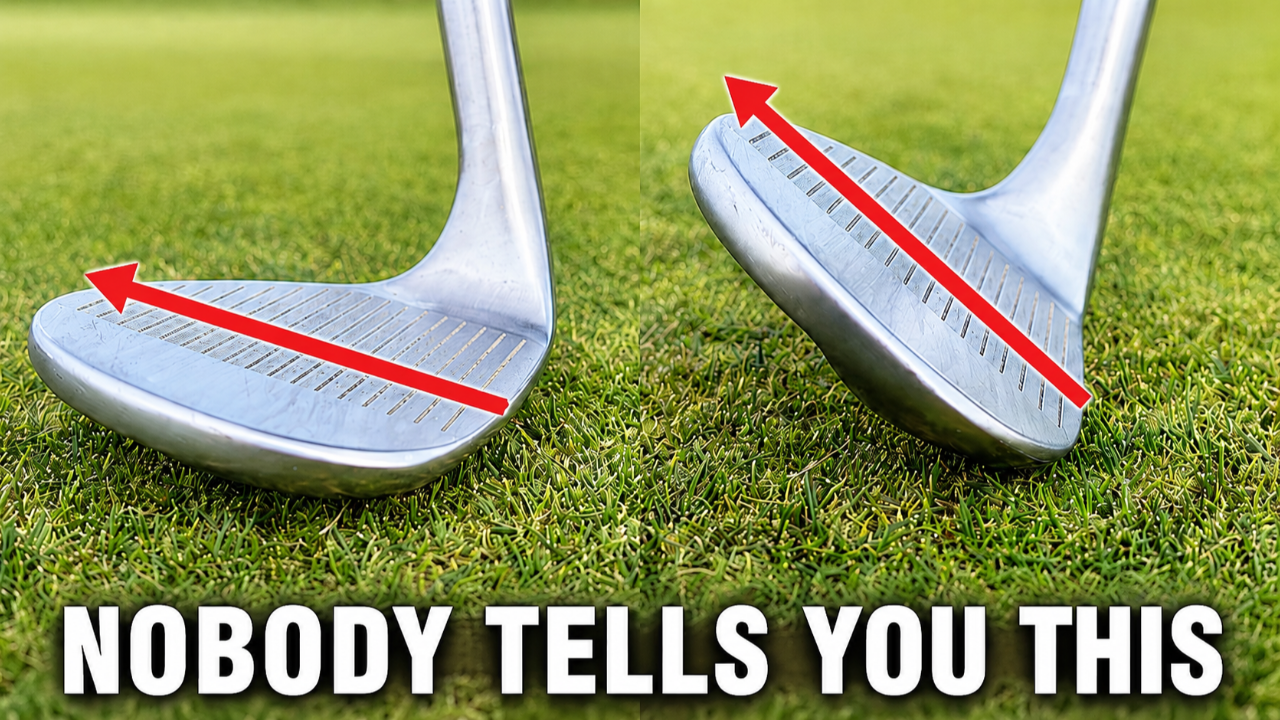
When we look at a poor chip, we often see the club travelling too much around the body. That makes the club shallow coming into the ball and encourages golfers to add loft through impact. From there, it becomes very easy to hit behind the ball or catch it thin. Compare that to a better chip, where the club is travelling much more directly towards the ball and coming down onto it. The result is a much more consistent strike.
The mistake I see most golfers make is trying to fix this by thinking about positions. They try to force the club into a certain place, which can make the swing rigid and wooden. Instead, I want you to give your body a problem to solve. Your body is incredibly clever, and if you create the right problem, it will often find the right movement naturally.
So here’s what I want you to try. Take your most lofted club, something like a 60-degree wedge, and actually open the face slightly. You might even have it sitting around 70 degrees. Now you’ve created a problem: you want the ball to finish towards your target, but the face is pointing to the right. Your body has to find a way to square that club up through impact. That naturally encourages the club to travel more directly towards the ball rather than getting thrown around the body.
The second part is getting rid of the flick. Instead of trying to add loft through impact, feel as though your thumbs are falling down towards the ground. Your lead hand naturally rotates, your trail wrist maintains its hinge and the shaft stays forward. You’re effectively delofting and squaring the club through impact. This gives you a much more stable action and a much better chance of striking the ball first.
This is also why I like using a highly lofted wedge for practice. If you use a pitching wedge and try to lean the shaft forward, the ball can come off incredibly hot. So golfers naturally start adding loft by flicking their hands, and that’s where a lot of the fat and thin shots come from. With the 60-degree wedge, you’ve got plenty of loft available, so you can learn to strike the ball properly while still producing a controlled trajectory.
Your setup can help too. Move the ball slightly back, keep your weight forward and feel as though you’re leaning towards the target. Then your job is simply to find a way to deloft that open clubface through impact. Don’t get obsessed with the positions. Give your body the problem and let it solve it.
If you struggle with a slice pattern or tend to swing across the ball, you can create another problem by dropping your trail foot back slightly. Now your stance is aiming more to the right, so once again your body has to find a way to get the club travelling towards the target. You’re still keeping the weight forward, but you’re encouraging the correct movement without trying to manufacture it.
The beauty of this technique is that it works for different shots around the green. If you want a shorter or higher shot, simply move the ball further forward. The basic movement stays the same: stay forward, strike the ball first and feel the clubface squaring and delofting through impact. From the rough, the same principle applies. Rather than trying to keep the loft on the club to help the ball escape, allow the clubhead to fall naturally and feel those thumbs pointing down through impact.
So rather than trying to remember ten different positions, give yourself the right problem to solve. Take a lofted club, open the face, set yourself up correctly and learn to square and deloft that club through impact. This can create a much more consistent chipping pattern and, most importantly, give you far more confidence around the greens.
Full Transcript- All right. Come on. Come on. [sighs] Jeez. Come on.
Come on. Use the bounce. Get underneath that ball.
How often do you find yourself next to a green and they you start getting really nervous and you you know you've been practicing, the practice has gone pretty good, but then you do that. You fat it or you thin it. It's super frustrating, isn't it? really really is. Well, in this video, what I want to do is I want to share with you the one technique that you can use for 70 to 80% of the golf shots around the green from tight uh tight lies, from rough lies, from really tricky lies. This one technique works all of the time. The problem is most of the golfers I'm coaching are doing completely the opposite to what I'm about to share with you and it's ruining their short games and making them very, very nervous around the greens. I want to share with you the tech this one technique cuz I think it could really really help. And we'll start here and then we'll drift around to some more difficult rough lies around the green. But before I get into the video, look, if you're new to the channel, it's your first lesson of mine. Please consider subscribing. I release videos just like this one every single week to try and help you improve your game. But you never have to remember a thing. Everything I do here, I'll put into a free download practice guide that I'll pin to the top comment below this video. Or you can simply scan the QR code right there.
So, that's a much better shot, isn't it? So, what have I done differently? Well, take a look at my swing coach app here. Notice on the thin shot, notice where the club is traveling. It's traveling away around my body here. And what that does is it means that the club is too shallow. It's coming in and it starts to become almost it looks like I'm trying to add loft to the ball here. And what that does is it can cause me to hit the ground behind the golf ball. It can start to cause me to hit thin shots and obviously fat shots. And this is where I see a lot of players when they're uh practicing their uh chipping. Compare that to the image on the right hand side. Notice where the club's traveling now. It's much much more directly almost in line. It's coming down on the golf ball much more direct and gives me a beautiful strike. So visibly we can see a huge difference in those two actions. One is going to give me consistent chipping and the other one is where most people are sitting. Now if you're like most of my students they go okay got it Danny I'll just get the club out in this position here. If you've ever tried that kind of position orientated style coaching sometimes when that happens do you find yourself getting a bit rigid a bit controlled and a bit wooden? I certainly do and many of my students do. What we got to identify if you have a problem with your chipping is just identify what's going on here. What you're trying to achieve because most of the time it's the opposite to what you should be trying to achieve. And that is what develops this pattern. Let me explain. I'm going to get you to do something which you've probably been told not to do. I want you to start chipping with the most lofted club in your bag. I've got a 60°ree wedge here. Now, I use this all the time and I recommend my students do. Why? because I believe it could be the greatest training a year that exists in your golf bag for your short game. You see, when you're chipping to we want to make solid contact. So, we want to make sure we strike that golf ball first. And you'll see with the better players when they're chipping around the green, they hit these fairly low shots that are always checking. Yeah, they don't generally hit these really high ones. They're always playing low shots onto the green and checks near uh near the flag. And they they're generally doing it with a 60 degree wedge. But they don't just do that. They have the not the 60 degree wedge at 60 degrees. They actually opening up to sometimes even 70 degrees, but then they launch the ball incredibly low. So if they're launching it low, they've turned this 70° wedge into a 45 degree wedge. H that is a pattern of movement of delofting the golf club. So they have created a motion that delus the golf club. Stay with me on this. Most of my students when they're chipping, they bring out pitching wedges. Now, the problem is that maybe have a little bank like this and they want to get a chip it close. There's not a lot a loft on there. If they do what they should be doing, which is striking the ball first and leaning forward like this, that ball's going to come off so hot, so hot, and so fast. So they solve that problem by adding loft, by flicking like this, maybe even coming around a little bit like this. All those problem solving exercises with the wrong club start to cause potentially fats and thins. Am I saying there isn't a place for pitching wedges and nines and eight irs? 100%. If I want to play a low running shot that runs a long way, yeah, 100%. But for a lot of shots, we're in trouble. We need loft and we just need to know how to use it. So, I believe when I see poor mechanics like this that are causing fats and thins, I often think it's just you're running a poor pattern and we're going to change that. So, what we do is is we want to give your body a problem to solve. That's the thing. Your body's incredibly smart. It really, really is. So, the problem is this. We want to play a shot that's reasonably low and checks out to the flag. But, we set ourselves a problem. We chose the 60°ree wedge. And we actually even open the club face a little bit to 70 degrees. That is a problem. The other thing we've done is what? It's now pointing to the right hand side. Lots of problems. We want to hit it on target. So you have to find a way. Your body has to find a way to solve this problem. Do you think you will come inside here when the face is already over aiming over there? Unlikely. Yeah. Much more likely to swing this way. Yeah. There's the first thing that's going to help you come down on the golf ball. The second thing here is this. We want to stop the flicking motion. Do you think you're going to get flicking when you've when the face is here and we and the aim is to deloft it? No. Flicking is what most people live with by right when this when they're duffing and thinning shots. What we're going to do, look, is this face is open. All we're going to do, look, this thumb of my lead hand here just falls down to the ground. Little rot. See how my left hand's almost rotating as well as it does that falls down. Same look with my right hand here. I've got a nice hinge in my wrist here. Naturally, this is the uh keeps the shaft forward. Fall down to the ground. So, join those two things together. All I'm really doing here, look, is my thumbs are falling down to the ground and I am delofting and squaring the club face up through impact. This, look, gets this beautiful club coming down on the golf ball. I have a nice bit of shaffling here, which gives that uh great strike. And I'm completely in control over this shot. Look at how stable everything is here. I don't have all this flicking, which is where most people live because they're having to do because you've already put yourself behind the eightball with probably the wrong club and the wrong concept. So, let's hit a couple of shots now and I'll show you how this applies to every shot. A lot of shots, 78 shots around the green. So, I'll get myself set here. setup wise. Look, I might even move the ball back in my stance here. Why? That's going to help me solve that problem of um of the face being open to 70 degrees. I'm going to get my body looking like the light leaning trope. We don't want to be like this where most people are when they're struggling with a chipping leaning trope. Again, solving the problem of I've got to find a way to deal off this club. Now, when I'm swinging here, look, I am staying forward and I'm simply working a way to deal off this club. For me, that's just simply pointing the thumbs down through that impact area. Get myself set. Look.
You see how low that's gone there? Let's run out to the flag. And some people might say, "Well, Danny, well, why wouldn't I just start with it square? Surely that will be easier." It would. Yeah, possibly. But the reality is the best players are always starting with it open. And I think the reason why they do that is because it does form a problem that your body then creates a motion to solve compared to if it starts square hasn't really got a problem. So you could fall back into this. So what we try to do is we want to force good motion. The best players this club is tipping forward like this as it squares. The poorer players are going the other way with their short game. The other thing just to watch out for when you're doing this, if you particularly if you've got a like a slice pattern in your game, I see a lot of players here even with this, they might start to have this pattern. This is a normal pattern. They might try and square the face doing this. Just when when people do that, all I do is I say to them, look, let's create you another problem. I get them to draw their right foot back a little bit here. Same principle, right foot back. So the stance line is is aiming to the right. Now suddenly, what's that done? Well, well, we don't want to hit over there. So what do you do? create a problem. Now, look, one, we're keeping our weight forward, but we're creating a problem the body has to solve to tip that club this way onto that golf ball. Does that make sense? So, super simple, but this is a brilliant way of creating the perfect pattern for solid strikes around the green.
So, you might be asking, does it work actually for shorter shots? Absolutely. Same pattern. All I've done here to pop that up a little bit there was move my ball further forward here. Everything else remains the same. I'm still leaning forward. I'm still in a sense squaring that face there, but I'm still
chipping. Yeah, still striking. Still popping up there. Let's try now from the rough. So, I'm going to keep this as similar as I possibly can. Open the first maybe to like 70 80. And then all I'm going to do here slightly wider stance just for me to get stable around this this bank that I'm in. It's a horrible, horrible lie. But from here, all I'm going to do is this. I'm going to imagine the same principle. I'm going to imagine in a sense delofting the club through impact here, delofting it. And then I'm look I'm actually going to continue that loft closing almost through impact. Most of the time when people are struggling here, they look like they're trying to keep loft on to get it out of the rough. That is a disaster. We want the head falling beautifully under gravity, tipping forward, and just dropping down. And like I say, a lot of those things will happen if you start with the fist nice and open and then just visualize that club squaring up through impact here. Get those thumbs pointing down. Let's have a look at this.
That's probably as good as I'm going to do. I mean, that for me is a worldy. I mean, what is it? Six feet. Probably just gone out camera. Six feet that there. And all I've done there is just drop that club. Turn those thumbs down. Turn them down. not flick turned them down to the ground and that glove is just balls just popped out beautifully. I'd be super happy with that. So, I don't want you to think of all these different positions, right? You'll see with the my my swing coach app, it showed me I was in here and if you happen to use the app and you get stuck and you see that kind of motion in there, don't try and fix it by going on here. Understand the pattern. As soon as you form a problem that your body's got to solve, these positions often start to take care of themselves. So go and choose your lofted club, add loft to it, and find a way to deloft it to produce much much lower trajectory shots. When you want the high one, you just push the ball a little bit further forward in your stance, but exactly the same thing, uh, same action, same pattern is what you need. This closing down or squaring down a delofting pattern as opposed to the adding loft one. I really hope you it helps you. It certainly helped many of my students, helped a recent one, Adam, and maybe even share that video with you very soon. If you enjoyed the video, give it a thumbs up. Maybe share it with your friends. And if you enjoyed seeing the swing coach app, that's my brand new app that will show you what you're doing wrong in your swing, but more importantly, show you exactly how to fix it with videos like this. I'll leave a link to a twoe file file trial in the in the comment below, or you can simply just scan the QR code right there. But until next week, have a wonderful golfing week.
