
The Last Chipping Lesson You'll Ever Need - 3 Simple Tips
Jun 02, 2026 Get This Free Practice Plan
Transcript Summary-
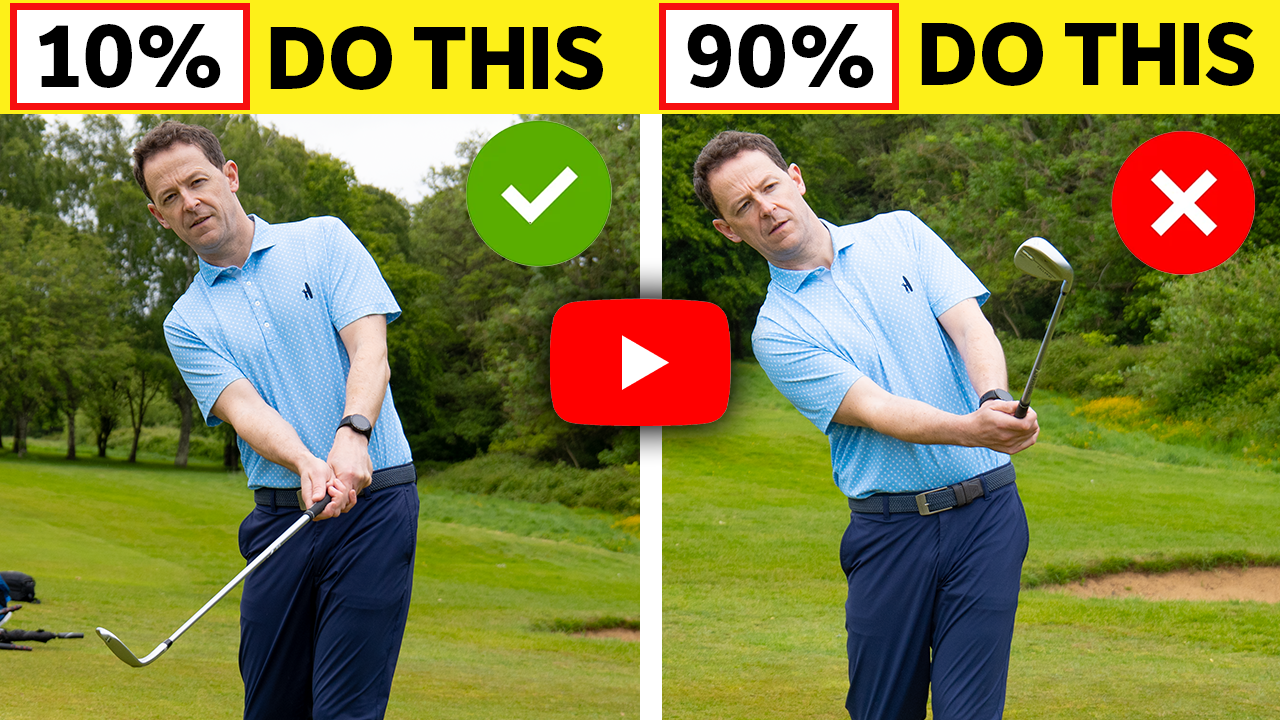
Did you know there’s a very clear movement pattern that the best golfers use every single time they chip? The interesting thing is, most amateur golfers are actually doing the complete opposite without even realising it. So if you’re out there thinning chip shots, hitting the ground behind it, or occasionally throwing in a shank, the chances are your pattern is out of sync — and that’s why nothing you try seems to stick consistently.
What I want to do in this video is show you that simple chipping pattern the best players rely on. Once you understand it, it really does make those shots around the green feel far more predictable and far less stressful. But before we get into it, if you’re new to the channel, please consider subscribing. I put out videos like this every week to help you improve your golf, and everything I teach also goes into a free practice guide linked in the comments or via the QR code.
Now, this one is a big deal. My Shot Scope data shows that if you improve your driving by 10%, you might only save a fraction of a shot. But if you improve your short game from inside 50 yards, you can save multiple shots per round — around 4.9 on average. So this area of the game is absolutely huge.
So what are better players actually doing? One thing that might surprise you is how often they’ll use a 60° wedge around the greens. Most amateur golfers are almost scared of it, but it’s a vital club, and the best players are incredibly comfortable with it. The key isn’t the loft itself — it’s the pattern they use with it.
What you’ll notice is that they often start with an open face at address, even for a low chip shot. But through the impact area, that face is consistently squaring up and actually losing loft. That’s the pattern. And this is where most struggling golfers go wrong — they tend to either add loft through impact or try to hold the loft on, which leads to inconsistency, fat shots, thin shots, and poor contact. That pattern simply doesn’t exist with good chippers.
So how do you build it yourself? First, you need to understand something slightly counterintuitive — you actually want to reduce loft through impact, even when you’re trying to hit higher shots. It’s not about scooping or adding loft. It’s about controlling the face so it naturally returns square while the body supports the motion.
Let me show you how to set it up. You start with the face slightly open, ball position just back of centre, and your weight clearly forward. The feeling is that your hands are slightly up and ahead, because you want to strike the ball first and then the ground. From there, you make a few rehearsal swings where you feel the thumbs working down towards the ground — that’s the key sensation.
What that does is it educates the wrists. The lead wrist starts to rotate and control the clubface, while the trail wrist maintains structure instead of flipping or rolling. You’re not throwing the clubhead at the ball — you’re controlling it through impact. And as you swing, the body naturally supports that motion.
So you get set, open the face, weight forward, and then rehearse that feeling of the thumbs and wrists working down. When you swing through, it’s all about maintaining that pattern — not adding loft, not flicking, not trying to help the ball up. The loft reduces through impact, and that’s what gives you clean, consistent contact.
One of the best ways I’ve used this with players is to give them a simple visual — imagine there’s a line or a stake just ahead of the ball. Your job is to clip the ball without breaking that line. That naturally keeps your body forward, stops you leaning back, and encourages the correct strike pattern every time.
You’ll also notice something interesting — when you get it right, the ball comes out lower with control and a bit of check. That’s exactly what you want for most chip shots.
Now, if you want to hit a higher chip shot, the pattern doesn’t change. That’s the important part. The only thing you adjust is the setup — maybe the ball moves slightly forward and the swing is a little longer. But the same principle applies: the face is still squaring up through impact, not adding loft.
The difference is that with a higher shot, there’s less friction between the club and the ground, so the ball naturally rides up the face more. You’re not trying to scoop it or get underneath it — the loft and launch happen as a result of the strike, not by forcing it.
So whether it’s a low chip or a higher soft landing shot, the pattern stays the same. Open the face at setup, control the face through impact, and let the body support that motion. That’s what creates consistency.
Get that pattern working, and you’ll find chipping becomes far simpler, far more predictable, and a lot less stressful.
Full Transcript- Did you know that there's a pattern of movement that the best chippers use every single time for all shots around the green? But if you've been struggling with your chip shots — maybe you're thinning it, fatting it sometimes, or even throwing in the occasional shank — the chances are you're using a completely opposite pattern. And no matter what you try and work on, nothing will work consistently well. In this video, I want to show you the exact chipping pattern the best players are using time and time again to make these shots — which you might find difficult — so easy. But before I get into the video, look, if you're new to the channel, it's one of your first lessons of mine. Please consider subscribing. I release videos just like this one every single week to try and help you improve your game. Plus, you never have to remember a thing. Everything I do here, I'll put into a free download practice guide that I'll pin to the top comment below this video, or you can simply scan the QR code right there. So, I'm really excited to share this one with you because data from my Shot Scope watch tells me that if I improve your driving or long game by 10%, you'll only really drop 0.02 shots. But if we can improve your short game inside that 50 yard range, you can drop up to 4.9 shots on average. So, this is huge. So, what do the best players do? What is their chipping pattern? This might surprise you. They generally use 60 degree wedges all around the green. Whereas my amateur students, they're almost scared of the 60. But I don't want you to be. It's a vital club in your bag and the best players use it all the time. But what are they doing? Because they use a 60 degree wedge, yet they're hitting these balls incredibly low with spin. How are they doing it? They have a chipping pattern where they actually start at setup with an open face — even on a low chip shot. But what they do is this. That face is always squaring and delofting through the impact area. That is a pattern I simply do not see in players who are struggling with their chip shots. Most of the time if you're shanking it, thinning it or fatting it, I am seeing a pattern where loft is being added through the impact area, or the player is trying to hold that loft through impact. That is not a pattern that exists with good chippers. So, how can you develop this chipping pattern yourself? Because if you can, I promise you, you will be amazed at the consistency of your ball striking around the green. So, here's where I'd start. Make sure that in your mind you are visualizing the loft of that golf club reducing through the impact area. Counterintuitive, isn't it? Even when you want to play those high chip shots. I'm going to show you a high one in a second. Exactly the same pattern. The best players start with an open face and the pattern is actually squaring the face and delofting it — even on the longer ones. Surprising, isn't it? So here's how you set it up. We start with an open face. In fact, Alex — one of my students this week — was really struggling with his chip shots around the green, very inconsistent. He said, "Danny, why would I start with an open face when I'm trying to play a low shot?" Why? Because it gives the body a problem. And this is what the best players have figured out. It gives the body a problem. It forces you. Now, if I want to hit that ball straight, I'm going to have to do something with the face. I'm going to have to square it up. So, it almost forces you to do the correct chipping pattern every time. Because if you didn't, and you just did this, the ball would go over to the right. So, it's already forcing this beautiful pattern where the lead wrist starts to turn down. Look here. See that motion? The thumbs are going down. Look at my trail wrist here. It's not doing this. It's not slicing across. It's not rolling. Look at this motion here. Starts there. Thumbs point down. I've still got my right wrist angle here. I've still got control over that club head. I'm not flicking it. Then from halfway back, my body supports that motion all the way through. So I get myself set. Open my face. Ball back. Hands up off the legs. Lean my body forward — because I want to strike the ball then the ground. It's going to help me play a low chip shot. A few little practice swings where I really feel like I'm pointing those thumbs down to the ground, and away we go.
You see — that's really simple. And you'll notice as I go through this chip shot it is unbelievably simple in the sense that once the hands are up here, all you're doing is educating what that lead wrist is going to be doing through the impact area. Knowing that pattern, add the flow with the right wrist. Look at my right wrist. Still got the flex in my right wrist here. The thumbs are going down and I'm feeling that chipping pattern. Now look at this. If I just used my arms, it would look like this. But now, I'm adding body — my body is going to start to support that pattern. Would it support it if I did this? It doesn't feel right. That's what supports those wrist angles. But as I'm doing this pattern, my thumbs are turning downwards to the ground. They're not closing the face like this. My body's finding a rhythm now, starting to match that chipping pattern. I'm even feeling like I'm leaning forward. Why? Because I want to catch the ball first. And now I'm building the rhythm — that pattern of motion with my wrists and arms is being matched and supported by my body. Now, what you can do with this — and this is what I gave Alex — is I got Alex to imagine hitting the ball under a stake like this. So when he played a chip shot, I said, "Right — now you've got the pattern, Alex. What I want you to do is imagine that rhythm of motion here, those wrists turning downwards, and playing the ball underneath the stake." Now his body had gone from leaning back like this to actually staying forward — to keep the loft off that 60 degree wedge — which gives you better ball striking and even a bit of spin.
Lower flight. Nice little check. Oh, just like that. So, he then asked me, "Well, Danny, what about if I want to play a higher chip shot?" Exactly the same. So, what we're going to do now, just for a bit of fun, is play a slightly higher shot. I am going to do exactly the same thing, but this time I'm going to move the ball forward in my stance. And all I'm going to do — what creates height, yes, is loft. I've got 60 degrees here, but I am still going to square that face up. But what's going to get the ball going higher is lack of friction. The ball isn't going to grip the face as much as it did when you hit the ball first. And that friction will get the ball sliding up the face and give you loft. You don't have to try to get underneath it. You don't have to try and add more loft to it. The same chipping pattern exists. Slightly longer swing — because obviously we're going for a slightly higher shot. But look at this. I am still squaring that face up. Still got a little bit of shaft lean through impact here. Look. And this is what gives me my body supporting it. The other thing here — when we did this with Alex — I said understand my right wrist here. It's not doing this. I'm here, and then look at my right wrist. It's actually going this way, not underneath. Very important. And understanding that will really help your body work through beautifully. So, get yourself set here. Let's keep it almost the same distance from the ball. Turn that face down. There's a higher chip shot. A little bit pushed out to the right, but you can see here I'm still squaring that face up. I'm not trying to get underneath it at all. Slightly longer swing as I said earlier. But look — I'm still squaring that face up here because there's grass between the ball and the club. That reduces friction. That's what creates the height. Beautiful shot. But exactly the same principle. Slightly longer swing because the ball needs more height. If I was playing chip shots around the green, I'd be all day long — ball back, hands up, weight forward, face open — and then imagine that lead wrist turning down, trail wrist turning down as I'm working around. Get that chipping pattern working. And that pattern of motion will work every single time. It really will. It's absolutely beautiful. So, give this a go. This hopefully should be the last chipping lesson you'll ever need. Get that strike working. Keep it super simple. Yes, use your body to support this. Don't just use your hands and arms — understand the pattern of motion. Allow your body to support that chipping pattern. And yes, you'll just find chipping so much easier. Let me know in the comments how you get on. If you enjoyed this video, give it a thumbs up. Maybe share it with one of your friends. And if you know somebody who's struggling with their short game, share this video. But until next week, have a wonderful golfing week.
