
This New Technique Makes Hybrids and Long Irons So Easy
Jul 06, 2026 Get This Free Practice Plan
Transcript Summary-
Last week I shared a simple drill called the Wrench Drill to help senior golfers hit their driver longer and straighter, and the response was incredible. Many golfers even reported gaining 30–40 yards. One question kept coming up though: Does it work with hybrids and long irons? The answer is yes, and in this lesson I want to show you exactly how to use it to improve your strike, increase your distance, and do it all without putting extra strain on your back.
The biggest challenge I see with hybrids and long irons isn’t age—it’s inconsistent contact. Most golfers move too much off the ball during the backswing, making it almost impossible to return the club to the same spot every time. If you want clean strikes, the club has to hit the ball before the turf, and that becomes much easier when your lower body stays more stable and leads the downswing instead of hanging back.
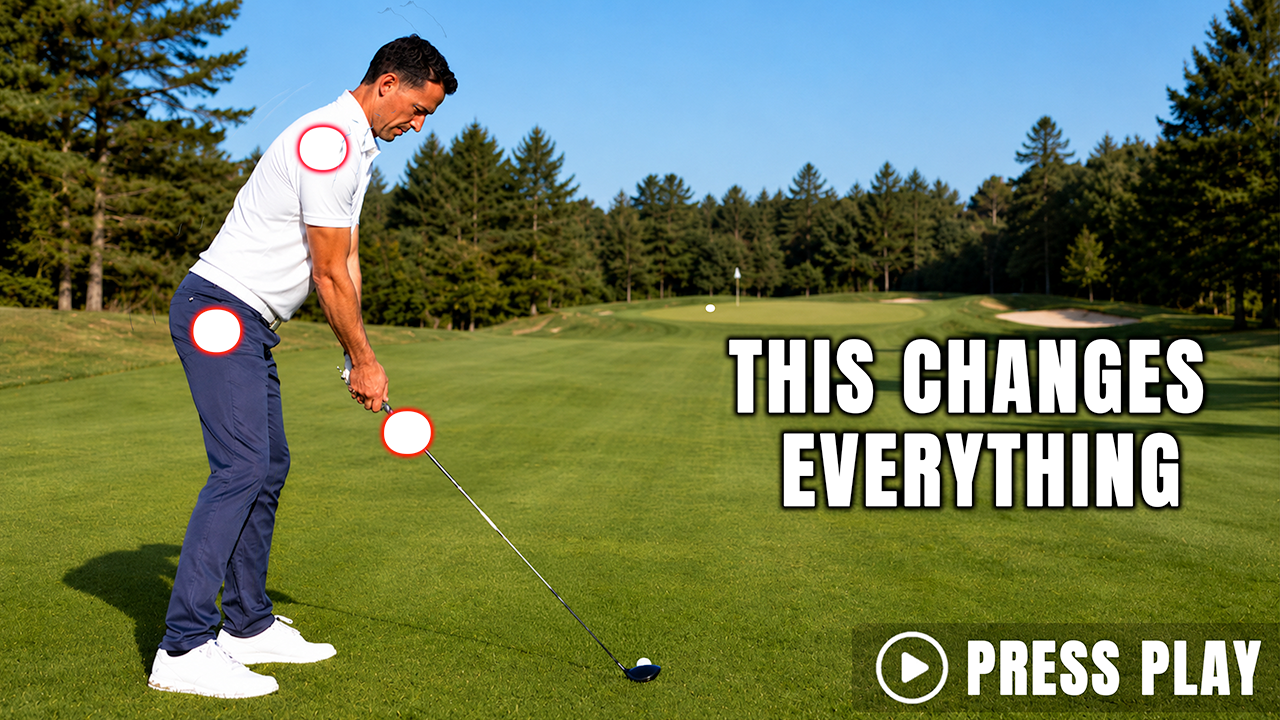
The Wrench Drill solves this by putting around 60–70% of your weight onto your lead foot at address. Then simply pull your trail foot back slightly. This setup encourages you to pivot around your lead side instead of swaying away from the target. By starting in a stronger position, your hips naturally stay ahead through impact, making solid, repeatable contact much easier.
When I introduced this to a student called Adam, his first reaction was that it felt restrictive. But what actually felt strange was removing the excessive side-to-side movement he’d become used to. Once he stayed more centred over his lead side, he immediately started striking the ball far more consistently. Within just a few swings, the heavy shots and mishits disappeared and were replaced with solid, penetrating strikes.
There’s another huge benefit too—distance. Staying over your lead side allows your body to keep turning for longer, creating a bigger swing arc without forcing it. It also helps the club naturally trail behind your hands for longer during the downswing, storing more energy before releasing through impact. Many golfers call this lag, but the key isn’t trying to create lag—it happens automatically when your body pivots correctly.
The exact same principles apply whether you’re hitting a hybrid or a long iron. Start with the ball just forward of centre, preset your weight onto the lead side, pull the trail foot back slightly, and focus on turning around that lead leg. Once the feeling becomes natural, you can gradually return to a normal stance while keeping the same sensation of staying forward through the swing.
Remember, this is a training drill, not necessarily how you’ll play every shot forever. Good golfers may move slightly off the ball, but they’re always back over their lead side by the time they reach impact. This drill teaches you what that correct movement feels like, helping you produce cleaner strikes, more effortless distance, and greater consistency every time you pull a hybrid or long iron from the bag.
Full Transcript- Last week, I shared a drill called the wrench drill to help senior golfers hit driver a little bit longer and a little bit straighter. The feedback has been unbelievable. In fact, some comments have been saying that they've been hitting 30 to 40 yards extra. Crazy. But they did ask, does it apply to hybrids and long irons? Cuz they said, look, when I'm on the fairway, Danny, I really struggle to get consistent contact. I don't get the height I want. I don't get the distance to sometimes reach those greens in two. How can I apply it to them? So, in this video, I want to share with you the wrench drill again, but how it applies to these long irons and hybrids. Because if you happen to be a senior golfer and you struggle with some flexibility and you've been told that you you can't swing longer and all those kind of things, I'm going to prove that one, you can. And you can effortlessly start to swing a little bit longer without hurting your back and generate some effortless yards. More importantly, consistent striking as well. So, I can't wait to share it with you. Before I do, though, look, if you're new to the channel, it's one of your first lessons of mine. Please consider subscribing. I release videos just like this one every single week to try and help you improve your game. Plus, you never have to remember a thing. Everything I do here, I'll put into a free download practice guide that I'll pin to the top comment below this video or you can simply just scan the QR code right there. So, by the end of this video, I want you to have something you can take to the golf course that's going to give you reliable contact and is going to help you hit the ball just that little bit further without more importantly hurting your back. What do those extra yards do? Well, if we can get you hitting the ball further, data from my shop's got what tells me that any golfer that hits the ball further naturally lowers their scores. Super super important. So, what is the wrench door? Well, the wrench door came from Andy Plameumber. Wonderful coach I spent a few days with um last week and I want to sh show you how to set it up and how it will improve your strike almost straight away. So, what do we try to do? What's the purpose when we're hitting a hybrid off the ground? We want to strike the ball first. So, we don't want to be striking too much ground behind the golf ball. We want to be able to land the club in the same spot time and time again. Now, what I see with many students come and see me, and this was certainly the case for um Adam this week who came and see me from America, his contact was inconsistent. One minute was back here, one minute was here. The main reason, and you'll see from some of these images, was because he was moving off the ball a lot. So, there's a lot of movement. If you move off the ball a lot, is that going to increase or decrease the likelihood of landing the club in the same spot every time? It's kind of obvious, right? So, we need something that's going to help us get to where the best players get to, which is when we're setting up here with a ball position just ahead of center with a hybrid. We want to make sure that our lower body is always leading. And when it comes through to impact, that lower body look is almost look ahead of that golf ball. Super super important. But if you've moved that lower body way off here, that's going to make it very difficult to get back on. So, how do you create that in a natural way? Well, that's where the wrench drill comes in. So, we get ourselves set up here. What I want you to do is put 60, maybe even 65, 70% of your weight over on this lead leg. This is presetting the wrench. Basically, the wrench is ultimately working and pivoting around this lead side. Why would this be useful based on what we've just said? Well, if you have put more weight over on this lead side, you are giving your hips a head start. Remember, the hips have got to get in front of that golf ball here to help you strike it. If they are back here, that's going to compromise your strike. So, you're already presetting a pretty good strike. So, that's the first stage of the renil. The second stage is to draw the trail foot back just a little bit, and we're going to use this as a prop. It's propping up this left side here, but it's also acting as a power source. I'm going to come into that later. So, let's start with that first. You're going to prop up this lead side here. You're going to have 60 or 70% of your weight on on this front foot here. And then you're going to imagine pivoting around this foot. So, I'm really pivoting around here versus swaying off the golf ball. Okay? So, that's the first stage of this drill. And you'll see from some of the images, I gave this to Adam and within just a couple of balls, his ball striking went from fats, shanks, and all over the place to beautiful strikes.
That's an absolute brilliant draw. So that is stage number one. Now, when Adam tried this, the very first thing he said, he said, "Dan, it feels restrictive." Strange, isn't it? So, I was saying how this effortless this should feel, but he said it felt restrictive. Why? Well, because he was used to freedom being this side to side. Now, if you try side to side, we're going to go on distance. Now, if you try side to side and put your weight over onto your right side, now we know now it's going to be a lot harder to get back. You can do that, by the way, but it just makes the challenge of getting forward much trickier. But the other thing it does is this. If you get your weight over onto this right side, notice how little you can You can try this. You can't pivot. I can't pivot my hip very much. That means I can't turn very much, which means I can't create an arc. I can't complete my swing. But if I now put my weight towards my lead foot, okay, now suddenly look, I can keep pivoting around and around. Now, you will see good players move off the ball sometimes, but by the time they've got to around about here, they're already back over where they should be. So for amateur golfers, I don't see enough people doing that effectively. So this is a great drill to kind of learn the sensation of staying much much further forward. So how is this going to help your distance? Well, we've already touched on a little bit. You're going to be able to swing a little bit longer. That's huge, right? It's going to be able to store more energy, more potential power into the shot. But this is something that is unbelievably important. Good players, power comes from this, not only length. the club trails the hands for longer. Some people have called this lag. They trails the hands and then gets naturally released through the impact area. But for the club to trail the hands, the club needs to trail the pivot of the body for longer than most amateurs realize. Now, you'll see with Adam when he's over on his back foot here, you'll see that club as it's coming down releasing a lot earlier through the impact area. But once we gave him the wrench drill and he started to get more over on his lead side, notice how much extra lag and the club was trailing behind him. So, this didn't just improve his ball striking as a byproduct of getting here. It naturally allows the club to trail longer and therefore you create more energy into the back of the golf ball and you get all of that completely for free in this drill. Now, is there any difference in long irons? Absolutely not. Same principle. Get the ball position somewhere in the middle here, middle to uh forward of your stance here. We want to strike that ball then the ground. We're going to put 60% of our weight over on this lead side. We're going to draw this trail foot back a little bit. Now with Adam, by the way, by once he got the feel of this, we could actually move his stance back, he had already got the feeling now of staying a lot more forward. He got the feeling of the pivot being uh forward. So we gradually move him back to a an ordinary position because now he knew what it's supposed to feel like with his hips much much further forward. And that's the purpose of the drill. You don't have to kind of fix yourself here all the time. It's okay to have a little move off, but for amateur golfers, what I'm seeing is is they just don't get back. So, you need to get that sensation, staying forward, pivoting, using that wrench drill to develop the correct sensation, using it to develop a much bigger motion on the way back so you can strike that ball than the ground. I'm absolutely addicted to this.
Lovely little draw. Simple as that. So, just set that wrench drill up. Get the sensation of pivoting around that lead leg here. Staying there. Don't let yourself fall back. Get used to staying further forward with the club trailing, swinging longer, and you'll start to improve the quality ball strike. Then gradually move that back if you want. Some people will probably keep with it. Move it back and then start to take those same feels. Is it okay to move off? Yes, of course it is. But the best players sometimes do that. But you've got to make sure that you get back there. And this what help this helps you to feel that. So I really hope you enjoy this video. If you missed a driver video, it's definitely worth checking out. I'll put that right here. If you have a fellow senior who's struggling with their B striking, please share this video. And of course, look, if you're new to the channel, press the subscribe button somewhere around here. I'll pin a um free practice plan to the top comment below this video. But until next week, have a wonderful golfing week.
