
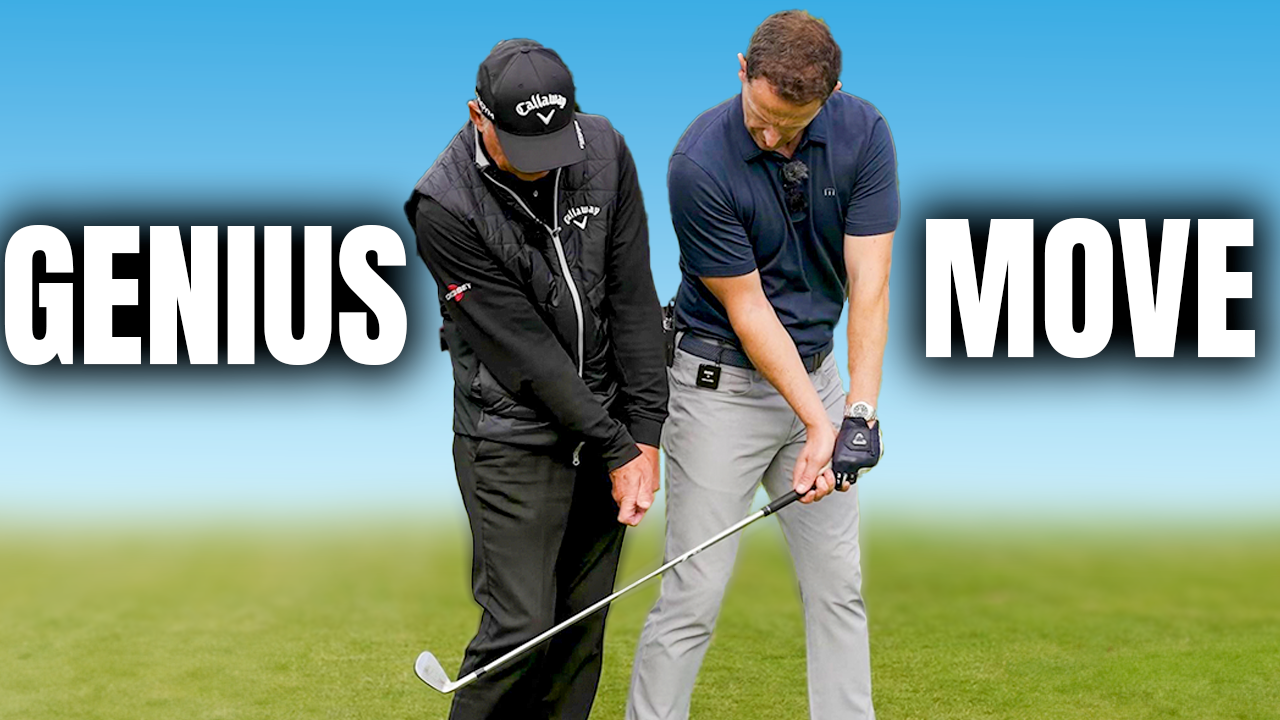
This One Right Arm Move Fixes 90% Of Ball Striking Problems - PETE COWEN
Jan 06, 2026 Get This Free Practice Plan
Transcript Summary-
So, in today’s lesson, I want to share something really special with you — a right arm secret that Pete Cowen shared with me, and honestly, it can transform the quality of your strikes whether you’re chipping, hitting irons, or even driving off the tee. What we’ll do first is start small. I’ll show you how to use this right arm correctly in your short game to get that clean, crisp contact around the greens. Then we’ll move back into the fairway and I’ll show you the subtle change that helps you compress your irons beautifully. Finally, we’ll take it all the way to the tee, where I’ll show you how to use this same principle to hit your driver straighter and more consistently.
Now, before we dive in, if you’re new to my channel, I post videos like this every single week to help you improve your golf game. Everything I teach you here today will also be available in a free download or practice guide down in the description box below — so if you’re looking to strike your chips, irons, and drives more solidly, you’re going to love this.
Let’s start with the short game. Two key things you need to control when chipping are where the club lands and the depth of your arc. Many golfers struggle because their arms separate too early in the backswing, which lifts the club and leads to thin shots, or they extend too much into impact, which causes fat shots. Pete showed me something so simple — keep the elbows close together throughout the swing. If that trail elbow stays connected to the lead elbow both back and through, it keeps the arc consistent and your contact solid.
One more thing: watch that trail hand. Don’t let it roll open in the takeaway — that destroys your wrist angles and makes it nearly impossible to return the clubface square. Instead, keep that trail hand feeling like it stays gently on top of the club. That keeps the face square, simplifies your motion, and gives you reliable contact every time.
All right, let’s move into the fairway. This is where Pete talked about something he calls “spinning the right arm down.” Now, compression comes from striking the ball first with a slight shaft lean, then brushing the turf after. To achieve that, again, your elbows need to stay close together into impact. When the right arm moves away from the left, you lose those wrist angles and all your structure — that’s when you get that flicky, weak contact.
Pete gave me a great drill for this. Simply grip the club “cack-handed” — that’s with your lead hand below your trail hand. Make some slow backswings, feeling how this naturally keeps your elbows close together and sets the club beautifully on plane. When you come down, the right arm starts to straighten, but here’s the key — as it straightens, the forearm turns down while the wrist angle stays intact. You’re not throwing the angles away or trying to drive the handle forward. You’re simply turning the arm down through impact. That’s what creates effortless compression.
So, practice that feeling — elbows close, arm turning down, and through. Once you’ve done a few slow reps, you’ll feel how easy it is to deliver the club squarely with power and control.
Now, let’s move to the driver. When you set up, that trail arm should sit slightly below the lead arm — almost like you’re about to give blood. The arms are close together at address, and we want to maintain that closeness all the way into impact and through the follow-through.
Here’s a great image: imagine you’re losing an arm wrestle with your trail arm. If you “win” the arm wrestle, your trail arm pushes out, your elbows spread, and you come over the top — steep, slicing across the ball. But if you “lose” the arm wrestle, your right arm tucks in, your elbows stay close, and the club shallows beautifully. From there, all you have to do is turn through, and you’ll hit it straight down the middle.
So, keep it simple. Control that trail arm in every part of your game. In the short game, keep those elbows together. With your irons, spin that right arm down through impact. And with your driver, feel like you’re losing the arm wrestle to stay connected. You’ll strike it purer, straighter, and with far more consistency.
If you enjoyed this lesson and you’d like to see the actual sessions I did with Pete Cowen, check out the videos right here. And if you’re new to the channel, hit that subscribe button and the notification bell so you don’t miss any future lessons. But until next week — have a wonderful golfing week!
Full Transcript - So, in today's golf lesson, I want to share with you a right arm secret that Pete Cowan shared with me that will improve the quality of your strikes with your chipping, your iron play, and your driver. What I thought we'd do to start with is we're going to start with short shots. We're going to show you how you can control this right arm to improve the quality of contact. And then what I'm going to do, I'm going to we're going to move back into the fairway to show you the small change you make with this right arm to improve the quality of your strike with your fairway shots. And then we're going to go all the way back to the tea and show you what you do there. So, if you're hitting driver all over the place, I'm going to show you how you move this right arm to help you hit driver much, much straighter. I can't wait to share it with you. Before I do though, look, if you're new to the channel, some of your first golf lessons of mine, please consider subscribing. I release golf videos just like this one every single week to try and help you improve your game, plus your near to remember thing, everything we do here, I'll put into a free download or practice guide in the description box below. So, if you're looking at improving your quality of your ball striking with your shot game, your favorite shots, and your T- shots, I think you're going to love this. So, let's get stuck in. Let's start with the shot game first. So, two things you need to be good at with short game. Controlling where the club lands and how the basically the depth of your rack. A lot of times when people are are topping the ball, their arms get kind of like this and they start topping it or what happens is they extend those arms excessively down into the ground and they fat it. So, we want to be able to control those things. And Pete talks about how to move this trail arm. And all I did here with my first lesson with Pete was I see a lot of players separating these arms very early in the back swing. Right? And when you do that, if you separate those arms, what's happened to the club if we move it back? It's risen, hasn't it? That would be a top shot if you didn't return it. But then what I see is if people do separate, they then extend this trail arm violently into the golf ball here. Then they can fat it really badly. So, as simple as it sounds, just get yourself set and look at those elbows there and just imagine this trail elbow here. Look, staying close to the lead elbow all the way back to the into the back swing into your follow through here. And if you've done that, what that does is it's simple, isn't it? We're controlling the arc and we're keeping the whole thing incredibly simple. The other thing just before we finish up here is is just avoid any excess roll. I see this a lot in short game. If you do that and you spin open that face, you're kind of destroying all your wrist angles. That's just crazy, right? You've then got to undo all that. So, as well as keeping the arms fairly close together, look what I'm doing my wrist. Look at my trail hand. My trail hand is just naturally on top of the golf club. That means that when I come back down, the face is where it started and I can just hit a simple chip shot. That is it. Right. Setup wise with short game, we know we're slightly further forward here. We want to strike the ground just slightly ahead of the golf ball here. And that's what we do with a short game. I'll show you what we do in the fairway. how we adapt this for the fairway shots in a second, but let's just hit a chip shot doing this. So, I've set the radius at the start of the swing, arms close together, little lean forward, little strike, little spin a second. There's the back spin because I struck it almost into the hole. That is how you strike the ball every single time with the correct control of your arc. Let's now check out the fairway shots. So, let's talk about how you now start compressing the ball off the fairway with your irons. And um Pete talked about spinning the right arm down. A lot of people kind of didn't understand what that meant. I'll go into that in a second. I think but first of all, let's just talk about what is really compression. Well, compression is when we strike the ball with a slight lean on the shaft here and then we strike the ground after the golf ball. We've got to be really good at achieving that. Well, we've just shown you with the short game. What do we need to do with the arms? Well, the arms here through the swing need to stay fairly close together as they're approaching impact. What happens unfortunately with a lot of players is is this arm here starts to move away and they start to spread. And when you do that, you lose, look, the wrist angle in your right hand here, the trail hand. And that often gets this kind of flickiness which then buckles the lead elbow and then you have this massive spread of your arm. So you you're you haven't got that ability to control the radius of your swing and therefore your strike. Right? So watch this. If I was to here, if I keep those arms very close together as I'm approaching impact, it's so much easier naturally to control that uh the wrist angle in my right hand and therefore I'm able to create compression really naturally. So the question is is how do you take that from there in the short shots to a full swing? Well, the way Pete gave me a wonderful drill to help you feel this and he said just go-handed just for a second. So take your club and put your lead hand below your trail hand. And what you do here is you simply make a golf swing backwards. Just turn yourself into the back swing here. And what that does is it kind of sits your trail elbow down. But really what it's doing is keeping those elbows close together. And what that does is, can you see how it sets the club beautifully on this angle here? Now this is important because a lot of players who, for instance, maybe pull inside excessively here, they can get the club swinging too far. this where they get flicky and hooky. A lot of players who maybe get slicy, then pull down this uh pull down here, they come steep, they get slicy and again flicky. Not not great. So from here, what we're doing is just move to your khak hand and just get a sense of what that is. Notice what that feeling is. Notice how the arms naturally when you do this drill sit close together. When they're coming down now, they're coming beautifully down. Look onto the plane here. And where my arms they're still close together. The question is now which is which uh was confusing for players was what does he mean by spinning the arm down? Well, a lot of times what people are doing is they're throwing the wrist angles away. They're trying to almost square the club just just with the hands. What he basically means is this. As I'm in a sense straightening my right arm, watch what happens here. I am straightening my right arm. My arm is in a sense turning down, but my wrist angle remains intact. Now, what I'm going to do now, I'm going to continue this through the shot. Make sense? So, what I'm doing, look at this motion here. Look, my arm is straightening. My wrist angle stays the same. My forearm here is just turning down. And look at this. I'm still turning down. I'm still turning down through the shot here, but those elbows are still close together. What I haven't done is done this. I haven't lost that. elbow hasn't popped out and spread apart which then loses the wrist angles and gets that flickiness. That stays the same. Neither, by the way, am I doing this. This would be my previous fault. I'm not driving my handle forward because that would require a flick. What I'm doing here is turning this down this way on the ball and then continuing that motion here. So, it looks like this. turning it down and through. And that enables the natural compression of the golf ball without me actively trying to drive it, which I see a lot of players trying to do. So, let's set it short and show you how this works in action. Also show you how to work on this. And I would do it in stages. The first thing I would do is do the cacandid exercise just to kind of get the feeling of the elbows staying fairly close together here on the way back and through. And then pay attention to what those elbows are doing. There's my trail elbow. Make some swings. Come back down to here. Where's my elbow there? Nice and close. And then just turn that down onto the golf ball. So you could rehearse just that there. Turn it down and through.
Simple as that. Beautiful. That's it. So let's now show you how controlling the right arm will help you hit driver much straighter. So look at this. When we set up, we're setting up with a trail arm. Look in this position. This almost like I'm giving blood to you here. And it's fairly close to my lead arm. And the idea is obviously you want to be able to control that distance all the way into impact and into the follow through. And that will give you a lovely amount of control over that golf club and help you hit driver straighter. So let's keep it again really simple. When you take the club back, we're letting that club swing all the way to the top. Now, some people and many people I coach don't have the flexibility to often keep this trail arm down. You'll even see people like Jack Nicholas would allow this trail elbow to kind of flail a little bit. But what he definitely does and all the best players do when they're coming down, they rejoin those elbows close together here so that the club's always tracking on this beautiful arc. When it tracks on this arc here, all they naturally need to do is then just turn beautifully, look into the back of that golf ball there. Unfortunately, if you allow those arms to spread and they stay spread apart, you come down steeply on it here, that gets you chopping down and across the golf ball. We don't want that. So, bear that in mind. And the simple thing, almost a great feeling you can have is when you're swinging the club back here, just imagine with your trail arm, you're just kind of almost like losing the arm wrestle here. So, when you're swinging, we're not going to win the arm wrestle. That would spread the arms apart. We're going to almost lose the arm wrestle as we're coming down into this place here. So, we're going to come straight down. Lose the arm wrestle back into here. Now, just feel that. Make a few swings. Just really sensing there. No, I'm losing the arm. I'm winning the arm wrestle there. That spreads my arms apart. Now, I'm going to have to somehow flick it. Lose the arm wrestle. The arms are close together here. And then they're still close together. Look. All the way through this swing. Let's have a look at this in action. So, you learn that feeling. Don't overthink it when you're over the golf ball. Do a few exercises. Get yourself set. I've set my radius at the start swing. There's my arms nice and close together. I'm going to try and maintain that all the way back all the way into impact and through into the follow through.
There we go. Simple as that. I lost the arm wrestle. Club stayed naturally behind me. It allowed me then to turn onto the golf ball beautifully under control and hit it dead straight. So, keep it super simple. Just control this trail arm with your short game. Keep the arms nice and close together here backwards and forwards. And then find a way where if you if you let the arm go out, it's not a problem. Just just means that you have to join it on the way down. The feeling to do that lose the arm wrestle. And then as you're coming through, keep them nice and close together here. And that then allows you to have a little bit more control rather than just a flash at it with your hands. All right, hope you enjoyed this video. If you did, you want to see the lessons I did my personally with Pete Cowan, check these videos out right here. If you're new to the channel, press that subscribe button and the bell. But until next week, have a wonderful golfing.
