
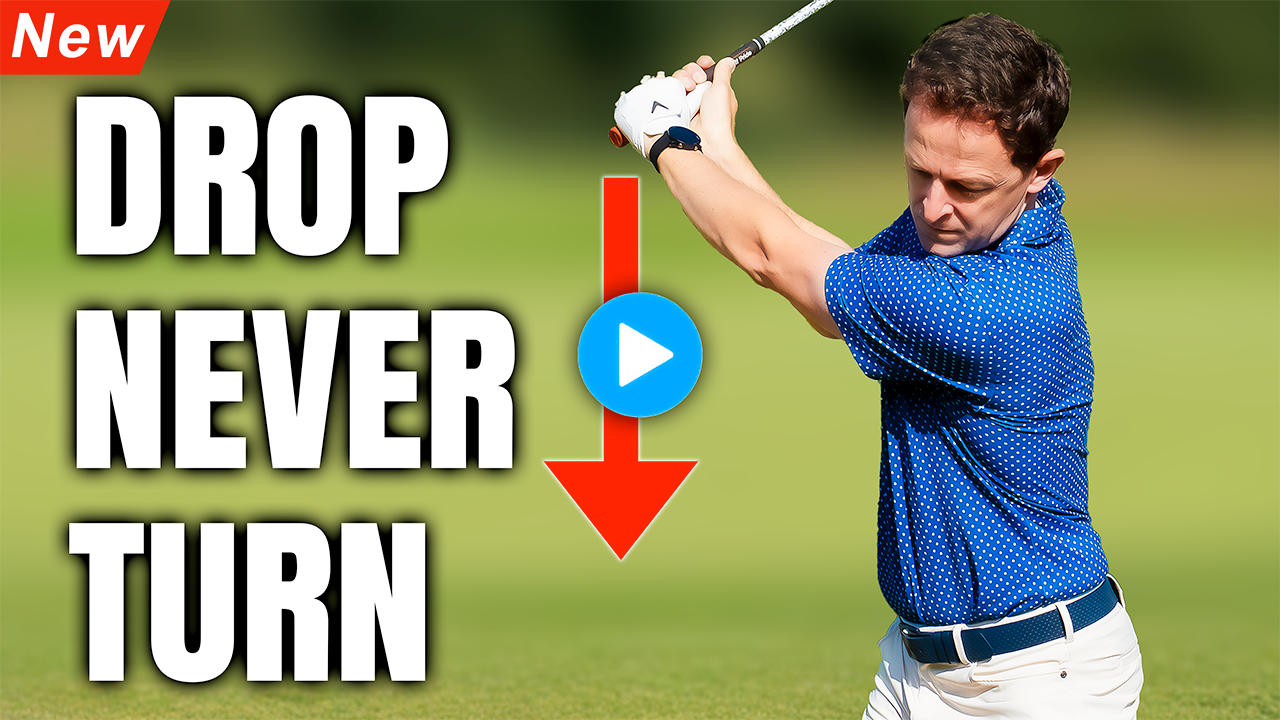
Why 95% Of Amateurs Improve With This Move
Jul 06, 2026 Get This Free Practice Plan
Transcript Summary-
Introduction
If you’re struggling with inconsistent ball striking with your irons or hybrids and feel like you’re leaving distance on the table, it’s often not because you need to swing harder. I was working with one of my students, Ian, who had exactly that problem. His strikes were inconsistent, his hybrids off the deck were unreliable, and he felt like he had to force speed. I shared one very simple image with him, and almost instantly everything started to click. His strike improved, the distance came more naturally, and best of all, it felt effortless.
The Pendulum Image
The image I gave Ian was to picture the golf swing as a double pendulum. Great golfers don’t force the club through the ball—they allow it to swing freely while their body supports that motion. As the club swings back and through, the body naturally tilts and shifts to support it. The hips and spine don’t simply rotate around on a flat level; they move in a way that allows the club to swing up, down and through with rhythm. That’s why the best players make it look so easy.
Why Most Golfers Struggle
The mistake I see time and time again is golfers trying to make the swing entirely rotational. Everything turns level, the body drifts away from the target, and then they have to lunge back to the ball to make contact. That destroys rhythm, makes strike inconsistent, and costs distance. The golf swing isn’t just a turn—it’s a swing. Your body should be supporting the swinging motion of the club rather than trying to control it.
Supporting the Swing
To create that support, feel your hips working on a gentle angle in the backswing without swaying. Your trail leg remains stable while the body creates a pendulum-like motion. Then, in the downswing, continue moving towards the target so the club naturally bottoms out just after the golf ball. This movement helps produce that crisp, ball-first strike without having to consciously manipulate the club.
The Second Ingredient
Once Ian understood the body movement, we added one final piece. As the hips begin to move towards the target, the arms naturally lower into position. From there, the key is to keep accelerating the arms through the shot. Many golfers slow their arms down and allow the clubhead to overtake too early, leading to fat shots, thin shots and weak strikes. Instead, keep the arms extending through the ball so they’re supporting the club’s speed rather than fighting against it.
Start Small
We didn’t begin with full swings. We started with small chip-like shots, simply feeling the pendulum motion and allowing the body to support the swinging club. As Ian became more comfortable, the rhythm improved, the strike became more consistent, and the distance appeared almost by itself. He even felt comfortable making a longer backswing because the swing now had flow instead of tension.
The Big Takeaway
The image I want you to take onto the golf course is this: let the club swing freely like a pendulum and allow your body to support that motion. Avoid simply rotating around the ball or swaying away from it. Keep your arms working together and extending through the strike while your body continues moving towards the target. When you combine those two ingredients, you’ll start to compress the golf ball more consistently, gain effortless distance, and understand why great players always seem to make the game look so easy.
Full Transcript- So, I've just come off a lesson with one of my students, Ian, who was very, very inconsistent with his ball striking, with his irons and his hybrids off the deck, but also lacking a lot of distance, too. All I did was share with him a very, very simple image, and he just got it. He just got it. More so, what I loved about this image is it allowed him to swing in a really flowing and very natural way, which led to better ball striking and more distance. Now, I added a second ingredient just to kind of enhance that. And I thought today I'd just love to share with you because it is very, very simple. And hopefully what it'll do is it will help you to improve your ball striking with your irions, hybrids, and it even works with a driver, too. So, before I get into it though, if you're new to the channel, it's one of your first lessons of mine, please consider subscribing. I release videos just like this one every single week to try and help you improve your game. Plus, you never have to remember a thing. Everything I do here, I'll put into a free downloadable practice guide that I'll pin to the top comment below this video, or you can simply scan the QR code right there. So, let me share with you exactly what I shared with Ian. Ian asked me, Danny, how do these great players, but they always have a consistent strike, but they just hit it miles and it looks effortless. And I said to him, take a look at this. So, they make it look easy because what they're doing is is they're allowing this club consistently to swing with freedom and catapult. Yeah, this club's just beauty free, but their bodies are supporting that in a really natural way. And I said to him, I want you to see, this is the image. I said, I want you to see the golf swing as almost like a double pendulum. And he said, what do you mean? I said, take a look at this. So, what we're doing is I've just said to you, big part of the golf swing is this. But we need our bodies to support that swinging motion. So, as I stand over here, I said, "Look, as I make a swing, what do you notice about the angle of my hips here? They've gone at this angle." What do you notice about my spine? Starting to almost go at this angle. So, my body here, as it swings back, look, it's working on a pendulum. Then, as I come through, look, I slide this way that the hips start to go level. What's starting to happen to my spine now? hips start to kind of go this way. And what happens to my spine? It starts to go like this. Can you see now, Ian, how that is helping to create support this swinging golf club? So, as I work here and I swing here, I am now allowing that club beautifully to swing, but now on a pendulum. I He said, "What am I doing?" He says, "Well, what you're doing is is you only have one dimension of the golf swing. You're just turning." So, what you're doing is is everything about your golf swing is simply looking like your shoulders are turning to level, your knees are turning to, you're turning around here. But when you turn around here, naturally, it's what see all the time with a lot of golfers, you're moving off the ball. Now, the problem is is you then have to lunge your body back to the golf ball. There's no rhythm in that. Yeah. the golf swing. Yes, there's a turn involved. Of course, there is. But you have lots of this, but you have no swinging. So, you're like you're playing baseball. We need this club to swing up, down, and through. And we need our bodies to support that. So, there's two ingredients to this. I'm going to show you. We've just shared the first one. There is the arms. We're going to go into them in a second, but let's just focus for now on the body. So, I want you to get yourself set up. And what I want you to do is this. When we're swinging this pendulum backwards and forwards, we need that we need to strike the ball first. We want the the the pendulum or the club to drop just after the golf ball. So that is why that when you swing this way, we don't do this. It's not a sway. We're staying. Look, as I'm swinging and I'm getting this pendulum going back, you see here, look, my hips are going back, but that right leg is staying at this angle. I'm not swaying over here. So, I'm just creating a pendulum back. And now, this is the important bit. We're going to keep moving it this way. Yeah. And we keep moving this way. And that naturally allows the club ball the club to strike the ball and then bottom out just after the golf ball like this. So just picture that in your mind as you swing. And now see if you can connect that that body motion to the golf club. And he started to sense how his body Whoops. Didn't mean to do that. was actually swinging the golf club with momentum. Compare that to this. Can you see that? So I said, let's just start there and hit a golf ball. Just you picturing that motion. So this is where it started. I said the you can start small if you like. Feel those hips going on this angle here. Back sliding back and through. That's it. So we start there. Small shots just get a sense of that club swinging. Two, one, two. Nice and simple. Just almost just chipping it down there. And what I said to Ian, I said, "Look, can you sense now how the club is being that momentum there is being supported by your body?" He said, "Yeah, it feels like natural and rhythmical, but the ball striking was just a little bit still a little bit inconsistent." So, we just added one other ingredient. So, now he's got the sense his body is starting to support now this club. It's not just working around and around. He still has some turn, by the way. Right? We're trying to balance the swing out. It's not just working around and around. It's now actually starting to kind of work this way. Okay? So, I said to him, "Notice the sensation of this." Okay? So, he was already doing some great things as he's coming down here. Notice this as you start to slide those hips this way. What does that do? Well, that lowers the arms. You'll see a lot of great players here where you what you do with the weaker players. This is where Ian started. He's like this and then he's releasing the club way too early. That leads to weak shots, fat spins. Suddenly now he's getting the club naturally here. what he needed to do, this is important, was keep the acceleration of those arms going through the shot. Okay, the reason being is this club is absolutely flying now. Okay, now if you don't keep that acceleration up with your arms going through, that club is going to win. Yeah. So, if I stop my arm, so what happened? He got a bit here now, but the club's still far behind him. I said to him, you need to keep accelerating. So as you in a sense get here with a pendulum, we need to make sure that we are extending those arms out in front of us here. This is really really important. And all that does in a sense is stabilize that club coming around the ax still with power rather than crumple. So we did this now. So keep those arms fairly close together. Make a few swings. And just as you as you're swinging that pendulum, that club swinging beautifully freely. Can you see here how my arms are still close together now suddenly as opposed to this this
see the difference? Yeah. So now I've got control of the strike and the pendulum, but I'm not controlling the club. That's still beautifully swinging. I'm just supporting it with my body. And that was the final ingredient for Ian. What I loved about it, we started really, really small. And again, for him, like he said, it just felt effortless. And he started to naturally build up. He even said, "Look, it feels I can go longer now into my back swing." Well, of course you can because suddenly now you're doing this versus this. Okay? So, everything now started to uh basically count towards more distance and more effortless power. So, visualize that pendulum. Keep those arms nice and fairly close together on the way through to support that club. Okay, back. One, two, and away we go.
Nice and extended. Listen to that compression. Hey, press star. That's how the best players start to look effortless, but really what they're doing is is they are swinging this club beautifully, freely, but they're supporting it with their bodies. So, as that club accelerates here, they're basically breaking. Yeah. You don't have to think about that. That's what throws the club and the arms are supporting it on the way through and that's how they start to strike it much much more consistently. So, I hope that image helps you as much as it did. Ian, it certainly is one of those things that an ingredient that good players have in abundance. Most of my amateur players, they don't have that. Have lots of rotation. They have very, very little of this. And just to clarify, it's not a sway. It's this. You see the difference? My leg is still there. It's not swaying. Okay? Just watch out for that. So, if you enjoyed the video, give it a thumbs up. Maybe share it with one of your friends. And if of course, if you're new to the channel, press the subscribe button somewhere around here. If you're struggling with your driver and you want to hit that a little bit straighter, click this video right here. But until next week, have a wonderful golfing week.
