
I Wish A Golf Coach Had Told Me This Sooner
Aug 20, 2026 Get This Free Practice Plan
Transcript Summary- Have you ever stood over a bunker shot and started to get nervous because you just don’t know what’s going to happen? Maybe you’ve thinned one into the face, hit one fat and left it in the bunker, and suddenly you’re just desperate to get the ball out. Well, I had a member struggling with exactly this, so I gave him one really simple idea, and it completely changed the way he played the shot.
The biggest mistake I see is golfers trying to help the ball into the air. They think they need to lift it, so they manipulate the club and end up either hitting too much sand or catching the ball. Instead, I want you to think about the sand.
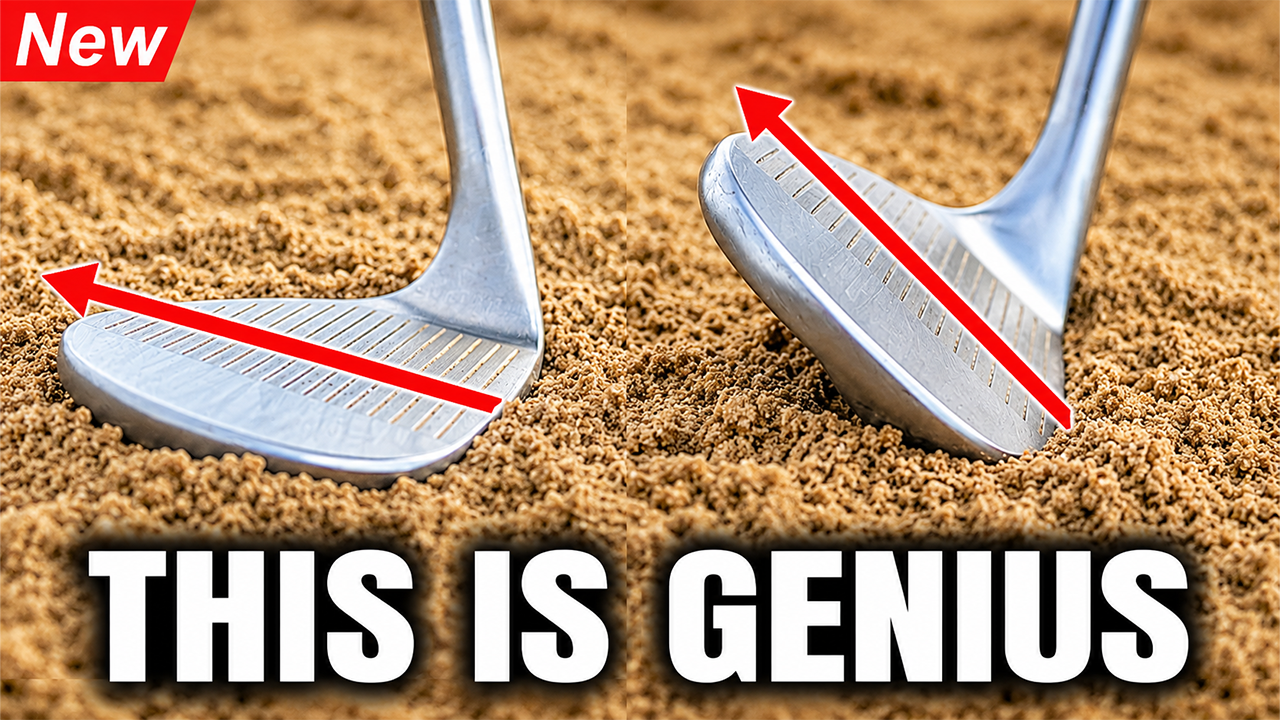
Imagine the ball is sitting on a wave of sand. Your job isn’t to hit the ball. Your job is to create that wave and push the sand towards the target. The ball will simply ride on top of it and come out of the bunker.
So rather than worrying about the perfect stance, ball position or body movement, start with the task. Find a spot just behind the ball and imagine you’re going to push that sand towards the hole. When you focus on that simple intention, your body starts to organise itself naturally.
And this is really important: you don’t necessarily have to open the clubface and aim your feet dramatically left. You can stand much more naturally and simply push the sand in the direction you want the ball to go. The more you wipe across the sand, the less energy you’re putting towards the target.
The same idea works from difficult lies too. If you’re on a downhill lie, have very little sand or you’re dealing with firmer conditions, the technique may need a small adjustment, but the principle doesn’t change. You’ve still got to interact with the sand behind the ball and move it towards the target.
If the sand is firm, you may need to let the leading edge dig a little more. If there’s lots of soft sand, you may need to take slightly less sand. But don’t overcomplicate it. You’re simply controlling how much sand you’re moving while keeping the direction of that movement towards the hole.
And that’s really the secret to becoming more consistent from bunkers. Stop thinking about hitting the golf ball and start thinking about moving the sand.
The ball doesn’t care what your swing looks like. It doesn’t care whether your stance is perfect. It only cares whether you’ve created enough of a wave of sand for it to ride out of the bunker.
So next time you find yourself in a bunker, forget about trying to lift the ball. Look at the sand behind it, imagine you’re pushing that sand towards the target, and let the ball ride the wave.
Do that, and I think you’ll find bunker shots become much simpler—and you might even start looking forward to them rather than being nervous about them.
Full Transcript- Have you ever found that when you're in a bunker, do you start to get a bit nervous? Maybe because you've thinned something to the face or you fattened it and left it in there and it becomes a bit of a struggle and all you want to do is get out consistently and control your distance. Well, just five minutes ago, one of the members here at Princess was struggling really, really badly. So, what I thought I'd do is I brought him into this bunker and just gave him one simple tip. He went from fatting and thinning to getting out every single time. And I filmed it for you because it's something that anybody can do. And most people who struggle in bunkers, they just don't do this. And shots go, my actual watch, they tell tells me that average players leave it in the bunker at least 10% of the time. And even when they do get it out, they don't get anywhere near the flag. So learning to play bunkers is so important. And all you've got to do is just this one thing, and I promise you, you'll get out every single time. And you'll learn to fall in love with them. So let's get stuck in.
A pretty good start. Yeah. What's tending to happen when you're in bunkers? I'm hitting them short, hitting the face, and sometimes knifing them. Knifing it. So, both of those things. If I get everything absolutely right, they seem to go okay. And what's right? What are you trying to do? What I'm trying to do is sort of get the right pace and the right right elevation obviously, but sometimes I rush it or I hit it too hard. It's just the consistency. I guess it's every amateur's issue. So, sometimes you hit it out. It's a bit left that one, but you sometimes get it out, but then sometimes you're knifing it into the face. Yes, indeed. Yeah. So, yeah, another one for me. Okay.
A little That was close, wasn't it? Yeah. So, that was perfect for that one. Yeah, that was almost That was quite knifey, wasn't it? Gone too far. Okay, now super simple this, right? I want you to imagine this for a start. If you understand this concept in bunkers, everything flows from this, right? Brit for a second. So, you've got sandwich here. Yeah. Yeah. I think lob wedge is a good place to start as well. Yeah. So, what it looks like to me at the moment, it looks like you're almost trying to help it up in the air. Right now, before we get into technique, all I want you to imagine is this. The way the ball gets out of the bunker is it comes on a bed of sand. Almost like a wave of sand. Yeah. So, all we're really doing is this. Just come in a second. We're going to get the sand and we're going to the sand itself is going to push that ball out of the bunker. Yeah. So, in order to do that, look at this here. If I'm here, I am going to take the sand here. Look, and I'm going to push the sand forward. See that? Yeah. Now, can you see how this doesn't look like that is going to create a pushing action with the sand? Okay. That's potentially if it comes in too far behind, it's going to do what? Yeah. It's going to hit knife it. Just hit it straight into the face. Exactly. And then you opened up your stance a little bit here and then if you got just about underneath it, you then pop it out sometimes. Yeah. But that doesn't look like an action that's going to push sand, does it? Yeah. Yeah. I see it makes sense. I It does. So, what I want you to imagine is, think of it this way, right? We don't make contact with the ball in in in a bunker. All I want you to do is don't worry about stands. Just allow yourself to stand however, right, for for the time being. But get the sand. Look at a spot behind the ball. I want you to imagine it's the sand pushing the ball out and a wave that's going to get the ball out. That make sense? Yes, it does. Okay. Okay. So, do a couple of practicings for me. Just to the side of the ball. Just to the side of the ball. Just to the side of the ball for now. Okay. And your only objective uh only thing you need to do here is imagine pushing sand forward. Right. Right. Okay. So, you actually want me to hit the sand? Yeah, absolutely. Yeah. So, you you've got to imagine you you're going to take sand. The leading edge is going to come in and you're going to push the sand in that direction almost out of the bunker.
Perfect. Mhm. Make sense? Mhm. Okay. Keep going. Great. Now, go to the golf ball now. Okay. Completely forget about trying to get the ball out of the bunker. Okay. Uh-huh. The height the ball travels Yeah. is simply this. When the club comes in, even the best golfers in the world, they might start open with their club face, but when they get into impact, look at this. Yeah. It's square. Yeah. It pushes sand. The club comes like this. It pushes sand. And the reason why the ball goes high is the ball loses friction. It rolls up the face because it's not actually and pops the ball much much higher. Uhhuh. Okay. Obviously, if you had a square face off the fairway, that would be a bit different. It would go much lower. In a bunker, the sand reduces friction and the ball goes higher. Yeah. Okay. So, your job is simply just to push sand that sand behind the ball towards the flag. So, aim more towards that way. That's it. Yeah.
I'd say that worked, I'd say. So, [laughter] how simple is that? Yeah. Yeah. One one tip I was taught to visualize is that you're take it's like an egg. The ball is the yolk and you're taking out the white. Yes. As well. Yes. Yeah. Okay. Absolutely. The thing is is this. I mean, it's I think what I like about the in a sense the sand being pushed is if you look at this, a lot of times when people think of the yolk, what they do is they just slam the sand. Yeah. Okay. But there's different ways of taking the yolk out, isn't there? Yeah. We could slam it this way. But why I like the pushing is what we're doing is is we're doing things that are pushing the sand in the direction of the hole. Mhm. And here the club face was square when you came through, but look at the height on that. Yeah. Yeah. It was very It was a great shot. Just landed soft as well. It did. It did. Right. So, do same again. There's no kind of like um and and your notice this. I'm not telling you how your body needs to move here. Just the pure task of I've got to hit the sand this way. Yeah. Your body starts to organize itself around that simple objection of oh, there's the sand. Push it forward. Okay. Okay. Nothing more than that. Okay.
Oh, wow. There we go. Okay. Not the line, but No, it wasn't. It just came out. But here's the thing. Absolutely. But I don't I don't know if you've ever been told, certainly I was when I was um uh starting out in golf that in order to hit the ball out of bunker, you got to aim left with your feet. Yeah. Yeah. Yeah. You don't. Yeah. Okay. If if you aim left with your feet, all that's going to do is create this wipiness. You can stand completely square like this. Yeah. And simply push the sand in the direction of that target. Okay. Okay. The more you wipe across the ball, the less energy is being pushed into the back of that golf ball. Yeah. Okay.
Wow. How's that feel? Felt great. Is that surprising? It is. It is. It's just uh Yeah. No, it's good. Very Okay. I've got I've got an issue with the line. Okay. I've gone wide on a few. Yeah. But since the ball's gone to the right, where could you push the direction of the sand? Yeah. Well, I just need to push it a bit further left. Yeah, that's it.
Easy game this. Well, we'll see now. I'll completely mess. If you just think about that sand, we're going to go. We're gonna What we're going to do in a second, by the way, is I'm going to give you some difficult lines because a lot of people ask, "Well, does this work from when there's no sand? Does this work when there's lots of sand?" And I'll show you how we do it. I'd be grateful for that. Yeah.
There you go. Okay. I slightly knifed that, I think, or maybe I hit it. Maybe I sort of was trying too hard to hit it, but Well, did you feel a bit more ball there? Yeah, I think I did actually. Okay. So, if you look at that there, that's still a great shot. All you did there was you struck the ground a little bit close to the golf ball. So, you had a lot more energy going into into that's all that would be great by the way if you wanted slightly longer shot. Yes, of course. But actually, you push sand in that direction. Yeah. So, now we're out every time we hit some pretty good shots. Okay. Absolutely. So, let's now imagine tell me what would be a bit of a a worrying bunkers for you back here. Yes. The back. Yeah. Okay. Right. Absolutely. So, downhill lie. Does it work? Okay. Okay. Downhill lie. Okay. Everything we've just talked about. Mhm. Do the same thing. Yeah. Now, you'll notice I haven't said to you at all yet, where should the ball position be? You know, I haven't told you where that should be. It should be forward. It should be back. And the reason being is this. I brought you a club for a second. Yes. Your ball position, okay, doesn't matter as much as it as a lot of people think. As long as you are pushing sand forward. Yeah. If you can find a way to push sand forward with a ball position there, you do it. If you have the ball back of your stance, as long as you hit the sand behind here and you push it forward, again, same principle. Mhm. The ball doesn't care how you stand as long as you push away behind it. Okay. Make sense? Now, you've got a sandwich here. When you're on a downhill line like this, I think loft helps. Okay. So, I'd now probably go to your 60. Yeah. Okay. Thank you. and nothing changes. Yeah. Look at the target. Uhhuh. Get yourself set and just feel like you're pushing sand into the back of that golf ball and out to the hole.
And there you go. Came out. All right. It just felt a bit knify though. Okay. Yeah. So you came out there, right? Yeah. A little bit. Yeah. behind the golf ball. Yeah. So if you look at that there, if you look at how much sand there, not a huge amount of sand, was there? Right. So think of that there. It came out a little bit knife you describing it. Yeah. So what's there? We'll probably if we look back on camera, we'll probably see that your body's a little bit back here. Yeah. And what you've done is you've come into the sand there. The club's starting to come out a bit early. Okay. Yeah. So you haven't pushed enough sand into the back of that golf ball. Okay. You follow? Okay. Okay. All right. Do you think I also felt it just seems a bit firm here as well? Great question. So, so when it's firm, okay, and we think of it now just I'm going to you can work this out for yourself. If it's firm, yeah, how do you push sand behind the ball if it's firm? How do you Well, have a think about it. Do you hit harder or Well, have a think about it. So, what have you got here? You've got a leading edge, right? Yeah. Yeah. So, what are you going to need to do with that leading edge? Dig in a bit, isn't it? Absolutely. Yeah. Okay, that's it. Okay. So when you when you're pushing sand now and notice how your body will start to figure this out. It will move to a place that's going to help you dig and push that sand out. You follow? Now you might overdo it sometimes and that's where that's where practice comes in. Yeah. But same principle. So get yourself set, line yourself up. Same principle. Just imagine you're digging sand out and pushing it into the back of that golf ball.
Oh, wow. [laughter] Great shot off a very, very difficult one. Yeah. Okay. Just got it out though. Yeah. But but same thing. So if you again, same principle. You could you might need to go even deeper. Yeah. Cuz again, the deeper you go, the less friction you have on the ball, the more the ball goes uh up in the air. Yes. Yeah. If you get it too shallow, there's more friction. It will bring the flight down. You follow? Okay. So that's hard. Now we've almost kind of covered that. Now the next thing what people say which is I think probably the hardest one is when we have too much sand. Yeah. Okay. Yeah. Okay. Would I use my sand wedge with that? Yeah, you can use sandwich. Yeah. So this one I would say is really difficult because now this is I think the hardest one of all the all to play. Yeah. But the same principle applies. Okay. Now the difference here is is you want to make a swing and you you know you're trying to judge. Now, if you go if this is where you could go too much underneath the ball. So, your job now is still the same. Push sand behind the ball, but maybe not maybe not as much as before. You follow? Yeah. Okay. So, same principle. Get yourself set. Look at that sand behind the ball and imagine pushing it out onto the green.
Look at that. And that's it. Yeah. So, there's people watching, David. Yeah. just just so that it doesn't because you're going to feel they're going to look at said that he's a ringer, right? When did we when did we meet? Uh about uh 12 minutes ago. [laughter] That's it. Right. Yeah. And um it's simple, isn't it? Yeah. Right. Absolutely. And that's all that's all that's basically all. It's simple with you standing there telling me what to do. Yeah. But but in summary, all you're doing in reality is is is just understanding how the ball doesn't care what your swing looks like. M all it cares about is are you producing a big enough wave for it to sit on to get out of that bunker and ride that wave and get out of the bunker. That's all you need to do. All right. Thank you, Dan. Good. Cheers then. Simple as that. How cool was that? I really, really enjoyed uh that lesson. I think David did, too. So, if you enjoyed it, give it a thumbs up. Maybe share it to one of your friends who's struggling in bunker play. If you want to improve your iron play, check out this video right here. If you've ever asked the question, Dann, I don't know what I'm doing wrong in my golf swing, consider checking out my brand new app here by scanning the QR code or checking the top comment below this video. It will analyze your swing and tell you what you're doing wrong, and then more importantly, will tell you what you need to do to correct it. Go and check that out. Until next week, have a wonderful golfing week.
